


Why do companies greenwash?
Z Energy’s recent apology for misleading environmental claims poses a question: Why do companies keep greenwashing?
In 2022, Ampol owned Z Energy told New Zealanders it was “in the business of getting out of the petrol business.” It sounded like a radical step for the country’s biggest fuel importer — a bold signal that the company was changing course.
Three years later, after a costly legal dispute with Consumer NZ and environmental groups, Z Energy has admitted the truth: Its much-promoted biofuels plant wasn’t operating, its carbon-reduction claims excluded the emissions from the fuel it sells, and its messaging went “beyond aspirational.”
To its credit, the company has apologised. But the questions remain: Why do smart, well-resourced businesses keep saying one thing and doing another?
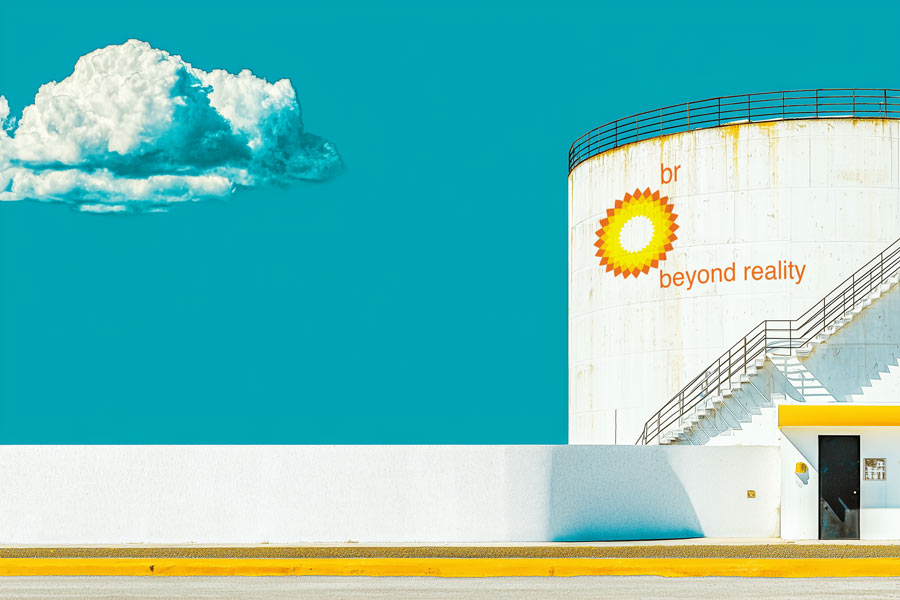
Z Energy is not an isolated case. Around the world, major brands have been caught in the same web. In the same sector, a quarter of a century ago, I saw firsthand the results of going “beyond reality” while working for the WPP branding agency that came up with BP’s now-infamous “Beyond Petroleum” rebrand. It’s a landmark example I’ve written and spoken about often over the years — a powerful core purpose and potential single organising idea that could have changed everything at BP and across the entire sector — if only Lord Browne, then CEO, had delivered on it.
Volkswagen’s “Clean Diesel” campaign promised low-emission performance but concealed deliberate manipulation of emissions tests is another case in point. H&M, Nestlé, Shell, HSBC, Kmart and others have all faced scrutiny for sustainability claims that overstated progress or obscured uncomfortable facts.
So why do they do it? Here are some reasons:
- To protect reputation – appearing progressive buys time and goodwill.
- To meet stakeholder pressure – investors, customers and employees expect and are much more vocal about, their expectations of business.
- To retain market relevance – being seen as sustainable, rather than being sustainable, has ironically become a survival strategy.
- To disguise inertia – rhetoric fills the gap where innovation and progress aren’t actually happening.
- To simplify complexity – clever marketing and creative advertising can tell a more compelling and engaging story than reality allows.
- Because of fragmented governance – the left hand (marketing) doesn’t know what the right hand (operations) is doing.
- Because leadership confuses communication with commitment – they believe saying it is the same as doing it.
- Because the system still rewards short-term profit – quarterly earnings trump long-term purpose.
- Because they lack a strategy for the future – senior leaders see change as risky and managing efficiencies as progress, missing out on the innovation that comes from grasping the future and contributing to it in ways that create new ideas, new value and sustained relevance for all stakeholders.
- Because they really don’t understand the power and potential of purpose — as a single organising idea that drives progress from the heart of business.
Most companies don’t set out to deceive. They simply haven’t re-engineered their businesses to deliver what their slogans promise. The result is an obvious credibility gap between what they say and what they do.
The hidden cost of that gap
The Z Energy case highlights the price of that gap.
The company spent hundreds of thousands of dollars in legal fees and lost months of leadership focus defending its own words. Far more damaging, though, is the erosion of trust.
Z’s chief executive, Lindis Jones, has walked a fine line between contrition and justification. He apologised “to the extent we caused any confusion,” but defended the campaign as “aspirational and provocative,” arguing it reflected the company’s intent to transition over time. It was, in effect, an apology for misunderstanding — not misrepresentation.
That distinction matters. Because when leaders stop short of full accountability, they signal that the problem is perception, not practice. The risk is that it entrenches the very behaviour the apology was meant to resolve.
When customers and communities discover that big environmental statements aren’t backed by real action, cynicism grows. The next time a company makes a genuine commitment, the public shrugs.
The collateral damage is borne by everyone — including the businesses trying to do the right thing.
The alternative: Walking the talk
There is another path, and we can see it in companies that have truly embedded purpose — organisations like Patagonia, Interface, Unilever and IKEA.
These businesses don’t just talk about sustainability; they integrate it into how they’re governed, how they invest and how they measure performance. They demonstrate that when purpose is treated strategically as a governance framework, not a slogan, it produces measurable benefits:
- Stronger stakeholder trust
- Greater innovation and resilience
- Higher employee engagement and retention
- Improved long-term performance
- Positive social and environmental impact
The irony is that if most companies actually did what their marketing departments claim, they would perform better — commercially as well as ethically.
The real issue is a failure of vision
Companies don’t greenwash because they’re evil. They greenwash because they lack a vision of the future.
Fixated on managing the status quo through lobbying politicians to protect short-term results, they are closed-minded to the possibilities of tomorrow — to the power and potential of new ideas to transform their businesses and ensure their long-term success.
Businesses such as Z Energy are emperors without clothes. They have jumped on the purpose bandwagon. They are not driven to make a positive difference to people and planet — but they are comfortable talking about it.
And that’s a great shame — and a lost opportunity. Because given their resources and influence, with a little courage these leading companies could do so much more than peddle purpose statements — they could live by them.
And that would benefit them and all of us as well.