




Walking the Purpose Talk Series: People and culture
Walking the purpose talk — a series exploring how leaders bring purpose to life by aligning what they do with what they say their organisations stand for.
People and culture
In my previous article in this series, I explored how systems and processes must be aligned with an organisation’s purpose, just as innovation, communications and every other function must be, if a business is to claim it is genuinely purpose-driven. But even when an approach to alignment is created and agreed, it is people and culture that determine whether it is ever truly realised.
Neither the most compelling purpose nor the most well-thought-through approach to alignment can compensate for a culture that is indifferent, fragmented or quietly resistant, nor can they unlock the full potential of a team that does not understand, believe in, or feel connected to what the organisation is trying to achieve. As the management thinker Peter Drucker famously observed, culture has a habit of overwhelming strategy; not because strategy is unimportant, but because culture determines whether it is ever made a reality. “Culture eats strategy for breakfast,” he said.
Culture is often described as “how things are done around here.” In practice, it is far more consequential. It shapes how decisions are made when no one is watching, how people treat one another under pressure, and whether individuals feel they are part of something meaningful or simply passing through. Many organisations falter here. Identifying a purpose is easy to declare, but if ‘business as usual’ practices persist and culture is left to chance, shaped by legacy behaviours, informal hierarchies and a quiet cynicism that nothing will change, don’t be surprised if nothing does.
A purpose-driven organisation closes that gap by understanding that high performance is achieved through communities of highly engaged people bound by a shared intent that has been collectively recognised. When that intent is clear, credible and consistently reinforced, work becomes more than transactional. It becomes contributory. This is where the idea of being purpose-driven moves from abstraction to advantage. Trust, relationships and a shared sense of purpose are not “soft” considerations; they are strategic assets in today’s world, where AI and constant uncertainty are reshaping how people experience work and, increasingly, their sense of wellbeing.
Like purpose, wellbeing is too often treated as something to be managed at the edges, through programmes or initiatives that sit alongside the “real” work. In reality, wellbeing is shaped by the work itself, and by whether people feel trusted, valued and able to contribute to something that matters, not only to the company but to them personally. A construction company that sees itself as simply building assets for profit will extract effort. One that collectively understands it is helping to build better communities will generate pride, ownership and a shared sense of achievement. The difference is not cosmetic. It is cultural, and it is reflected not only in engagement, but in consistency, quality of performance and tangible outcomes — including profit.
High-performing cultures are not built on inspiration alone. They are built on the alignment of understanding and commitment. Only when individuals both understand the objective and are committed to it do they become true contributors, lifting performance and bringing others with them. This is where many organisations struggle, particularly when purpose and values are defined top-down as the output of a senior management strategy day, rather than through involving people in identifying and defining purpose from the outset to create genuine ownership.
This kind of thinking requires more than management. Managers maintain systems; leaders create meaning. Leaders who create environments in which individuals understand not just what they do, but why it matters — and where what they think and feel is valued — create the conditions in which people thrive. They help shape cultures where individuals see themselves in the story of the organisation, where their contribution is visible, valued and measured. When that happens, purpose is no longer seen as a slogan, but as a shared endeavour that matters.
When clearly defined and properly embedded, purpose provides a shared reference point that aligns individual effort with collective ambition. It allows performance to be understood not only in functional terms, but in terms of contribution to a common goal across individuals, teams and the organisation as a whole. It creates clarity about what is expected, what is valued and what success looks like, and that clarity, in turn, creates confidence.
Without a clear sense of purpose, even capable people hesitate. They second-guess, hold back or retreat into the safety of their defined roles. In cultures where cynicism has taken hold, or where the tall-poppy syndrome quietly punishes those who step forward, this hesitation becomes self-reinforcing. Ambition is muted and potential diluted. Purpose, when made real as the enterprise’s single organising idea (SOI), does the opposite. It legitimises ambition in service of something bigger than the individual and gives people permission to care, to contribute and, importantly, to lead, regardless of their role or title.
This is where courage becomes central. It takes courage to hold people to a standard that goes beyond short-term performance, to make decisions that reinforce the integrity of the culture and, at times, to confront behaviours that undermine it. It also takes courage to lead in a way that is consistently human — to listen, to be transparent and, when necessary, to be vulnerable. Without that courage, culture drifts. With it, culture becomes a source of advantage.
Culture is not an output of strategy. It is the environment in which strategy either succeeds or fails. Leaders who understand this do not leave culture to chance. They design for it, measure it and lead it consistently, recognising that purpose does not live in statements or systems, but in people, and in what they choose to do together.


Walking the Purpose Talk Series: Processes & Systems
Walking the Purpose Talk Series:A series exploring how leaders bring purpose to life by aligning what they do with what they say their organisations stand for.
Processes & Systems
If purpose is to be more than rhetoric, it must ultimately show up in the machinery of the organisation. Not in the language of strategy documents or on the walls of headquarters, but in the systems and processes that govern how work actually gets done.
This is where many organisations quietly falter. Purpose is often expressed in brand language and leadership speeches but left largely disconnected from the operational architecture that drives daily performance. Processes continue as they always have. Systems remain optimised for yesterday’s priorities. The result is a subtle but persistent misalignment between aspiration and execution.
A genuinely purpose-driven organisation closes that gap. Purpose becomes a design principle for the systems that support decision-making, collaboration, innovation and performance, while recognising that even in the most technologically advanced environments it is ultimately human judgement that determines the outcome.
I was reminded of this recently at an event hosted by the British New Zealand Business Association (BNZBA), featuring members of the Emirates Great Britain SailGP Team. SailGP is one of the most technologically advanced sporting competitions in the world, where national teams race identical high-performance foiling catamarans capable of exceeding 90 kilometres per hour.
The margins between victory and defeat are measured in seconds, sometimes fractions of seconds. Performance therefore depends on the relentless optimisation of systems, data and processes, and of course the ability of highly skilled sailors to interpret and act on that information under intense pressure.
What was striking about the panel conversation with Emirates GBR strategist Hannah Mills and driver Dylan Fletcher was how explicitly purpose featured in their description of how the team and the competition itself operates.
SailGP’s purpose extends beyond the competition we see on the water. The league was established not only to stage world-class racing but also to accelerate the transition to clean energy through sport. The boats are powered entirely by wind, and the championship runs an Impact League alongside the racing series, rewarding teams for measurable environmental and social performance.
For the British team, this purpose is not simply a narrative attached to the sport. It is embedded in the way the team organises itself and in the systems that shape its performance.
As Hannah explained, GBR’s processes and systems are designed to ensure that racing excellence and environmental impact are pursued simultaneously rather than treated as competing priorities. Decisions about what the team chooses to start doing, stop doing and continue doing are filtered through that dual lens.
High-performance sport offers a useful mirror for business because it reveals what happens when alignment is taken seriously. In an environment where outcomes are transparent and the feedback loop is immediate, any gap between stated purpose and operational reality is quickly exposed.
SailGP teams rely heavily on advanced data analytics and increasingly on artificial intelligence to interpret the enormous volume of performance data generated during a race. Decisions about sail trim, positioning, tactics and manoeuvres are informed by sophisticated systems that translate data into actionable insight in real time.
But those systems are only as effective as the logic that governs them. When purpose is clear, it helps define what should be measured, what should be optimised and what trade-offs are acceptable. It shapes the questions teams ask of their data and the priorities embedded in the processes that guide decision-making.
In this sense, purpose acts as a Single Organising Idea (SOI) and a form of operational intelligence that is brought to life through an operating system.
Every organisation runs on a complex network of systems and processes: Performance management frameworks, procurement rules, innovation pipelines, incentive structures, governance mechanisms and increasingly AI-enabled decision tools.
These systems quietly determine what gets prioritised, rewarded and repeated. They influence how resources are allocated, how risks are assessed and how opportunities are pursued. But if those systems are not aligned with the organisation’s stated purpose, purpose will inevitably lose the argument and with that comes inconsistency and reputational risk.
In practice, this often explains why purpose initiatives struggle to gain traction. The organisation may have declared a new direction, but the processes governing budgets, incentives, reporting and performance measurement remain anchored in a different set of priorities.
People respond rationally to the systems around them. If those systems reward short-term outcomes or narrow financial metrics, behaviour will inevitably follow.
Embedding purpose into systems and processes changes that dynamic. It redefines the criteria by which success is measured and ensures that the operational infrastructure of the organisation reinforces the direction it claims to be pursuing.
This is not about adding complexity. On the contrary, purpose can simplifies decision-making.
When teams (and businesses), are clear about what they are ultimately trying to achieve, systems can be designed to support that aim directly. The organisation becomes better able to decide what to start, what to stop and what to keep doing.
High-performing teams understand this instinctively. GBR’s ambition, like any elite sporting team, is to win. But as the conversation with Hannah Mills made clear, how you win matters just as much as whether you win. Purpose therefore becomes a constraint as well as an inspiration. It defines the boundaries within which performance must be achieved.
For businesses navigating an increasingly complex world, shaped by technological disruption, rising stakeholder expectations and intensifying environmental pressures, that kind of clarity and understanding is becoming indispensable.
Because in the end, purpose is not proven by the elegance of the statement that describes it. It is proven by the systems and processes that bring it to life.

Walking the Purpose Talk Series: Communications
Walking the purpose talk: A series exploring how leaders bring purpose to life by aligning what they do with what they say their organisations stand for.
Communications
Late last year, a review of the ASX100 by Griffith University produced a statistic that should make all business leaders pause for thought. Seventy-two per cent of the companies analysed had a publicly available purpose statement. On the face of it, that sounds like real progress, a moment to celebrate even.
However, the gloss quickly fades. According to the researchers, fewer than half of those identified could credibly be described as being purpose-driven. In other words, while most large companies on the ASX have convinced themselves that having a purpose is reputationally advantageous, far fewer have understood or allowed purpose to function as the guide to the future of their organisations.
That gap, the difference between what you say your purpose is and what it actually drives, is critical and will define whether your communications help build business success or simply undermine it.
A lesson from history
A quarter of a century ago, BP unveiled a new brand identity and its infamous ‘Beyond Petroleum’ positioning. It was elegant. It was bold. It was, from a creative standpoint, irresistible. BP no longer stood for British Petroleum and oil; it stood for Beyond Petroleum and the harnessing of the forces of nature to generate energy. Green, already a corporate colour, became of four declared values underpinning it. The alignment between acronym, aspiration and aesthetics was almost too perfect.
Announced internally, it was a truly inspiring rallying call that had the potential to unite over 100,000 people around an exciting new direction that would secure the long-term investment and interest of key stakeholders, including shareholders and the planet. Announced externally, it was a premature declaration that would lead to costly outcomes and a reputation that has never fully recovered.
‘Beyond Petroleum’ implied arrival, but the business hadn’t gone anywhere and remained overwhelmingly locked into its oil and gas heritage. When operational failures followed in Texas City, Prudhoe Bay and finally in the Gulf of Mexico, the phrase did not merely look optimistic. It looked hubristic. As former CEO John Browne later acknowledged, the issue was the gap between rhetoric and reality. A more prosaic line such as ‘Going beyond petroleum’ would have lacked the creative neatness. But it would also have been more honest.
That was 25 years ago. One might have expected the lesson to stick.
It has not.
Since then, airlines have been reprimanded for implying that flying can be made sustainable through marginal adjustments. Financial institutions have been censured for advertising green credentials without adequately disclosing the carbon intensity of their lending books. Asset managers have faced fines for overstating ESG processes. Retailers have been challenged over the elasticity of words like “conscious”, “ethical” and “responsible”.
The pattern is familiar. A business highlights a positive slice of activity. The wider context tells a different story. Regulators intervene. The public shrugs and trust erodes a little further.
The cumulative effect has been corrosive. Each overstatement reinforces the suspicion that purpose is merely marketing fluff and that corporate virtue is a veneer applied when convenient and discarded when costly.
The tragedy is that many of these organisations are not insincere. They are in transition. They are wrestling with legacy assets, shareholder expectations, technological constraints and political headwinds. But communications that declares victory before the work is done converts a difficult journey into a credibility problem.
In a world mediated through screens, communication is no longer a decorative overlay. It is evidential. It is archived. It is searchable and scrutinised. It is compared against performance in real time. When purpose sits outside the operating system of the business, communications becomes theatre. When it sits at the core, communications becomes accountability.
From slogan to substance
So what does disciplined purpose communication look like in practice, especially in the vulnerable transition phase?
First, be transparent about the gap. Don’t pretend you’ve already become what you are still becoming. Use language that invites scrutiny rather than dodges it. The public is more forgiving of ambition than of misdirection, provided you’re honest about what is still work in progress.
Second, communicate trade-offs, not just goals. Purpose is real when it constrains as much as it inspires. If your purpose is shaping strategy, you will be able to point to choices you won’t make, revenues you won’t chase, suppliers you won’t tolerate and markets you won’t enter.
Third, manage the creatives. Advertising and PR agencies are paid to amplify. In a purpose transition, amplification without governance is how you manufacture reputational risk at speed. The brief must be anchored to the core purpose and bound by what the organisation can evidence. Passionate creativity is not the problem, untethered creativity definitely is.
Fourth, publish goals and report progress, religiously. Announcing targets is not virtue signalling; it’s a contract between you and your stakeholders. Regular reporting turns communications into an ongoing dialogue and brings stakeholders on the journey with you. It also creates internal pressure for delivery, because once you’ve made commitments public, the organisation can’t hide behind internal narratives.
Finally, put employees at the centre. Most purpose failures are not external, they are internal credibility collapses. If your people think purpose is a ‘slick marketing campaign’, you’ve already lost the plot. Internal communications must be grounded in operational changes, clear decision rules and genuine invitations to contribute, not grand declarations about saving the world.
The point of this series is simple – walking the talk is not about being perfect. It is about being aligned. And when it comes to communications, alignment comes from a deceptively unglamorous discipline; saying only what the operating system of the business can support and then steadily expanding what that system can truthfully claim.
In the age of social media, the most strategic communications move is often the least dramatic one. Be precise. Be proportionate. Let the evidence do the persuading.
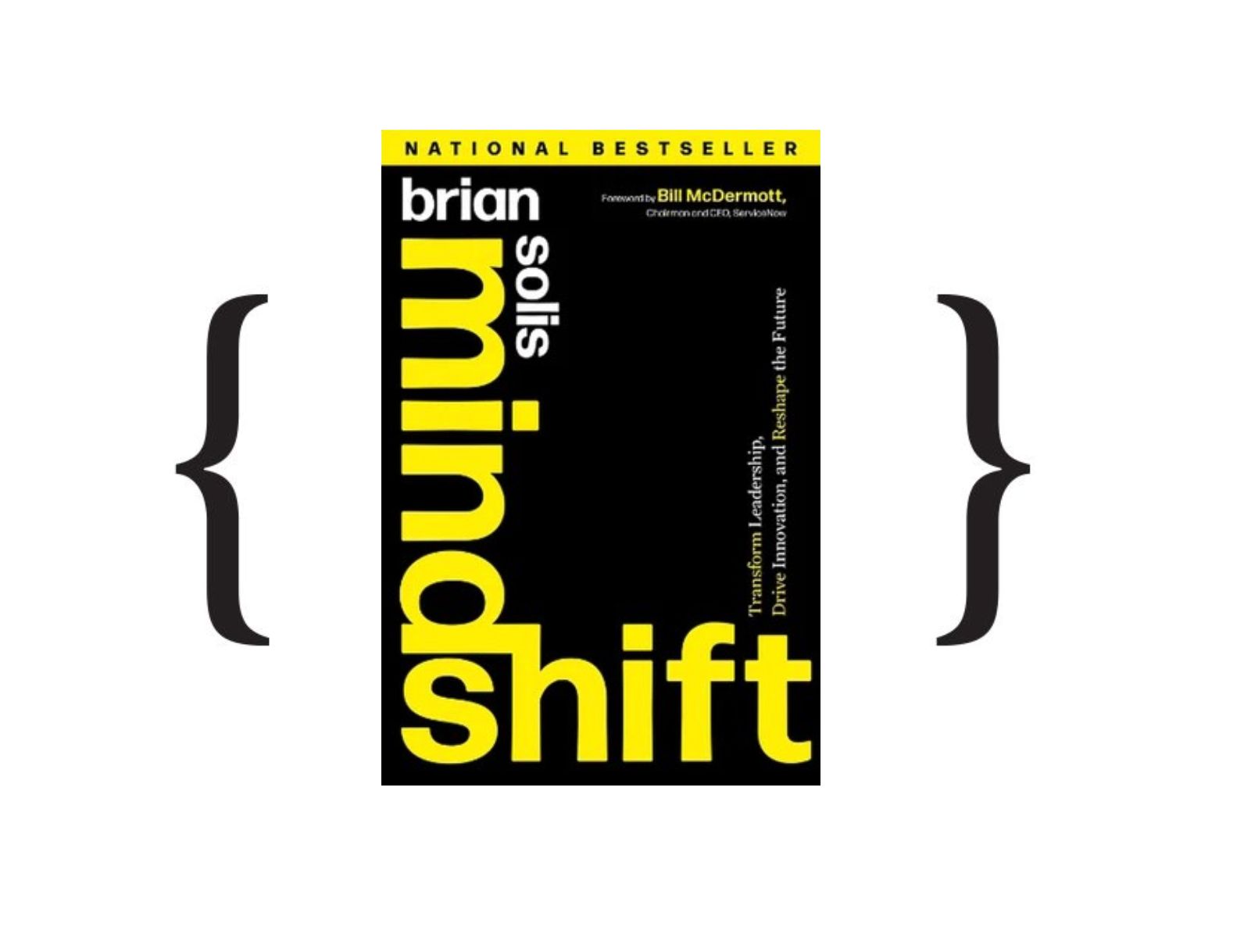
Book Review: Mindshift
Mindshift by Brian SolisBeyond Rhetoric: Books Reshaping the Business of Business
Brian Solis has written many books on business. His latest, Mindshift, is dedicated to “everyone who believes in something bigger than themselves.” It is an optimistic opening, and clearly an intentional one. A better tomorrow, he argues, starts not with new technology, new processes or new policies, but with a fundamental shift in how we think.
In an era defined by volatility, uncertainty, complexity and ambiguity, Solis contends that thriving comes down to mindset. Leaders, he suggests, open people’s minds to the art of the possible. They can change the mood from uncertainty to positivity. They help teams loosen the grip of the status quo and overcome the self-imposed limitations and excuses that quietly stall progress.
At its core, Mindshift is about perspective. The way we think determines what we see. And what we see determines what we build.
What makes this book more than a self-help manual is its seriousness about the psychology of resistance. I found it genuinely useful. For those of us working to move organisations from business as usual to being purpose-driven, the greatest barrier is rarely intellectual disagreement. It is psychological friction. Leaders may endorse ambition. They may speak fluently about vision. Yet when change threatens comfort, identity or established incentives, hesitation returns.
A senior leader said to me recently, with admirable candour, “We always find an excuse not to do something.” Solis would recognise the pattern. Much of the book explores precisely this human tendency and the yearning for the familiar even as the landscape shifts beneath us.
Through diagrams and a wide range of anecdotes, from business reinvention to the sinking of the Titanic, and the fable of The Frog in the Well, Solis illustrates how constrained thinking narrows possibility. The frog cannot imagine the world because it has only ever known the well and the sky above it. People (and therefore organisations), behave the same way. They optimise inside their existing boundaries and mistake that for progress.
The contrast between growth and closed mindsets runs throughout the book. Yes, there is repetition and the same ideas are revisited several time in different ways. But the reiteration serves a purpose. Changing mental models requires reinforcement, and Solis approaches the same insight from multiple angles but often in interesting and unexpected ways.
Importantly, Mindshift is not abstract encouragement. It offers practical suggestions for perceiving, organising and evaluating ideas. It emphasises the power of story in reshaping belief. And it underscores a truth many transformation programmes ignore: you can design the best processes and the strongest strategy with the clearest intentions, but if you cannot take your team with you, you will not move at all. Leadership is required.
We are living through a period of profound challenge but also extraordinary opportunity. Acting today, guided by vision, can indeed shape better lives tomorrow. On that, Solis is surely right.
This is an accessible and engaging book — worth reading, and worth reading with a pen in hand. It contains many small gold nuggets that encourage reflection.
Solis helps us understand why people struggle with change. For anyone seeking to open minds to new possibilities, the insights contained in his book are valuable.
Mindshift is available at leading bookstores and online retailers.
If you have a book that you think fits with this series, let me know: neil@neilgaught.com