



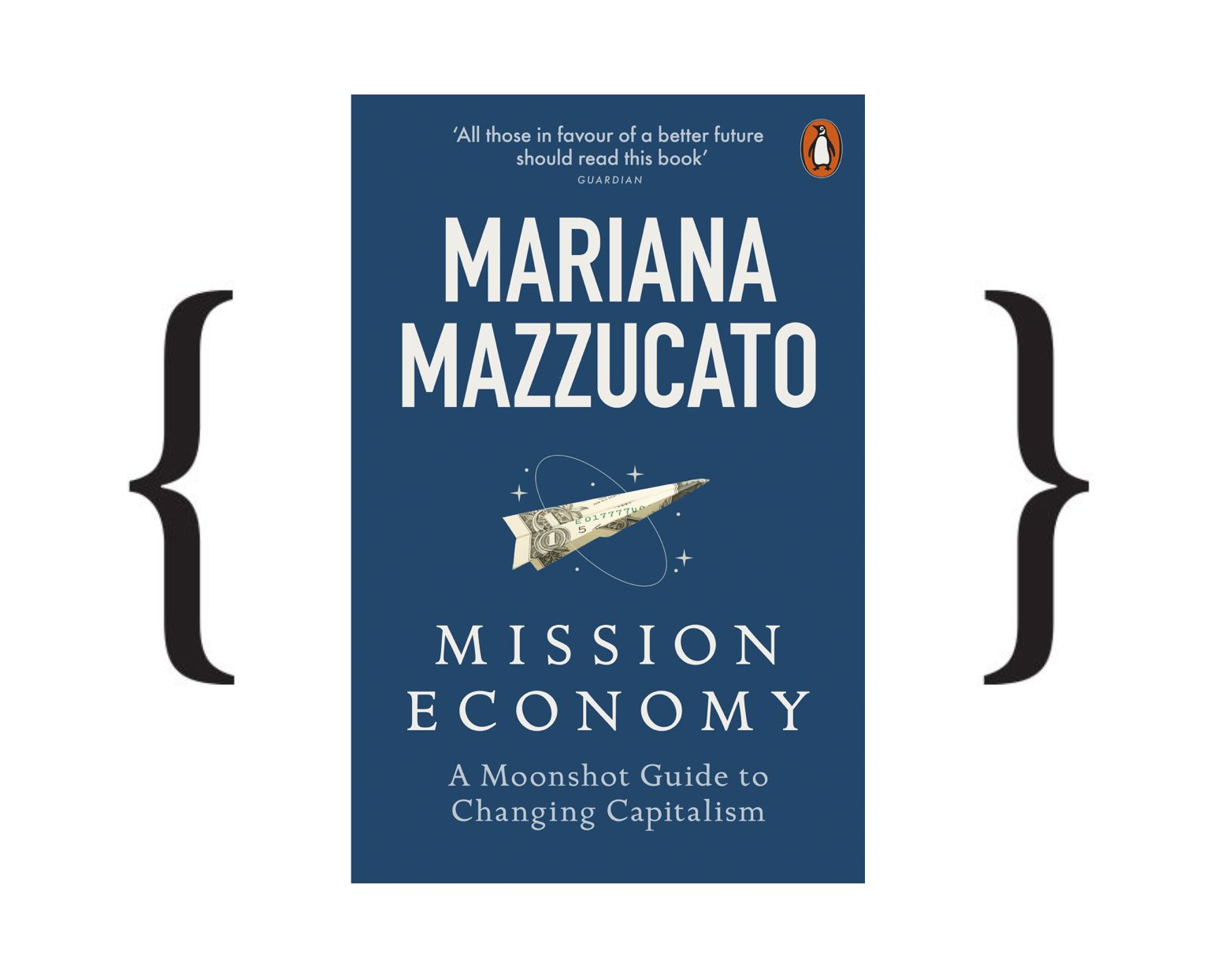
Book Review: Mission Economy: A Moonshot Guide to Changing Capitalism
Book Review:
Mission Economy
A Moonshot Guide to Changing Capitalism
by Mariana Mazzucato
Beyond Rhetoric: Ideas Reshaping the Business of Business
Capitalism, at its simplest, is an economic system defined by private ownership and the pursuit of profit. It is a remarkably durable construct. From Adam Smith’s invisible hand to Milton Friedman’s insistence that the business of business is business, it has evolved, adapted and, at times, been fiercely defended. Yet it has also been persistently challenged, reinterpreted and, more recently, reimagined.
Spurred by an increasing frequency of so-called “black swan” events, this reimagining has gathered pace since the turn of the century. A growing number of commentators, whose work includes Conscious Capitalism, Reimagining Capitalism, Doughnut Economics and Creating Shared Value, have sought to reshape capitalism into something more inclusive, sustainable and ultimately more resilient. Having reviewed several of these, one becomes attuned not only to their ambition, but also to their overlap.
It is into this well-tilled ground that Mission Economy arrives.
Mazzucato’s central thesis is both bold and appealing. Drawing inspiration from the Apollo programme, she argues that the world’s most pressing challenges (captured in the UN’s Sustainable Development Goals SDGs), require a mission-oriented approach. Governments, businesses and institutions, she suggests, should align around clear, ambitious objectives, coordinating effort, resources and investment in pursuit of outcomes that markets alone have struggled to deliver.
Few would dispute the intent. The idea that capitalism needs direction, not just momentum, is increasingly hard to contest. Nor is her assertion that purpose must move from the margins to the core of corporate governance to achieve that.
And yet, for readers familiar with the broader literature, much of this will feel recognisable. The anecdotes are well told but well worn. The oft-cited story of the NASA janitor “helping to put a man on the moon” has circulated in leadership circles for decades. The underlying message that shared purpose can align effort and elevate performance, is important, but not new.
This is less a criticism than a reflection of where the debate now sits. We are no longer short of ideas. The constraint is execution.
Timing matters too. Published during the COVID-19 pandemic, Mission Economy reflects a moment when collective action was not only possible but necessary, and when governments were stepping forward with renewed authority. There was, very briefly, a sense that crisis might catalyse a more coordinated and purposeful form of capitalism.
That moment has since shifted.
Today’s landscape feels more fragmented. Trust in governments and institutions continues to decline, leaving much of the world in what Edelman, a global communications firm best known for its annual Trust Barometer, describes as a state of “pervasive distrust”. The gap between promise and delivery has widened. And dominant pressures including the rising costs of living, financial stress and persistent inequality are fuelling division rather than cohesion. In parts of the world, more assertive forms of leadership are reshaping the role of the state in ways that feel less collaborative and more controlling. A shift that has not gone unnoticed by those wary of leaders who begin to look a little too much like kings.
Against this backdrop, Mazzucato’s claim that capitalism is in crisis remains valid, but incomplete. It is not in crisis for everyone. For a relatively small but highly influential minority, it continues to function exceptionally well. Which raises a more uncomfortable question: If the system delivers for those best placed to shape it, what is the real incentive to change?
There is also the question of what has changed since its publication in 2021, at the height of the pandemic, when the case for coordinated action felt both urgent and achievable. The rapid advance of artificial intelligence (notably absent from the book), is already reshaping not only the future of work, but the trajectory of capitalism itself. If missions are to guide the economy, they will need to contend with technologies that evolve faster than the institutions attempting to direct them.
None of this diminishes Mazzucato’s contribution. Her reputation as a serious and influential thinker is well deserved, and her well-structured and clearly articulated call to organise around ambitious, outcome-driven missions remains both relevant and necessary. But Mission Economy is, in many ways, a product of its time. A snapshot of a moment when alignment felt more necessary and perhaps, given the context, more achievable than it does today’s more divided and complex world.
Which prompts a broader reflection. The grand challenges she highlights have not gone away. If anything, they have intensified. But one is left wondering whether their architects fully anticipated the world as it now is — more contested, less trusting and harder to align.
For business leaders, the implication is straightforward, even if the execution is not. Whether framed as purpose, mission or, in my own work, a Single Organising Idea, the need for a unifying direction remains. But the environment in which that direction must operate is becoming more complex, not less.
Mission Economy, then, is less a roadmap than a reminder. Capitalism may be resilient, but it is not immutable. It can be shaped to deliver more inclusive and sustainable outcomes that enhance the wellbeing of all stakeholders, but only through alignment, accountability and a willingness to confront the structural realities of the systems we have created, and those with a vested interest in maintaining them.
The question is whether, in a more divided and technologically accelerated world, we still have the capacity — or even the inclination — to organise around missions that genuinely serve that wellbeing. It is a question that some, Mazzucato among them, remain determined to answer.
Mission Economy: A Moonshot Guide to Changing Capitalism is available at leading bookstores and online retailers.

Walking the Purpose Talk Series: Sales & Marketing
Walking the purpose talk: A series exploring how leaders bring purpose to life by aligning what they do with what they say their organisations stand for.
Sales & Marketing
If there is one place where purpose is ultimately tested, it is in how an organisation goes to market. As this series draws to a close, it is here, at the point where intent meets revenue, that the alignment between what an organisation says and how it grows becomes most visible.
If purpose is to be more than a statement, it must ultimately influence how an organisation creates demand and converts it into revenue. Not just what is said in campaigns, but how opportunities are pursued, how customers are treated and, crucially, which opportunities are declined.
This is where the tension becomes most visible. Sales and marketing sit at the sharp end of commercial performance. Targets are immediate. Incentives are clear. The pressure to deliver can be intense. In such an environment, purpose can quickly become something that is referenced in brand language but quietly set aside in the pursuit of quarterly numbers.
And yet, this is precisely where purpose matters most.
A genuinely purpose-driven organisation does not view sales and marketing as functions designed simply to maximise volume or short-term gain. Instead, they become mechanisms for aligning commercial success with the organisation’s reason for being. Purpose begins to shape not only how value is communicated, but what value is offered in the first place.
This has several practical implications.
First, it sharpens focus. When purpose is clear and operationalised, it acts as a filter for where to play and how to win. Not every customer is the right customer. Not every opportunity should be pursued. Sales teams are given permission, and indeed encouragement, to walk away from business that does not align. In the short term, this can feel counterintuitive. In the long term, it builds a more coherent, resilient and trusted brand.
Some of the most consistently cited high-performing brands have followed precisely this path. By being explicit about who they are for (and, just as importantly, who they are not for!), they reduce the cost of acquisition, increase conversion quality and build deeper loyalty over time. What appears to be constraint is, in reality, focus.
Second, it changes the nature of the conversation. Marketing shifts from persuasion to clarity. The aim is no longer to convince customers to buy, but to help the right customers understand why they should. This demands a different level of discipline. Claims must be credible. Trade-offs must be acknowledged. The distance between what is promised and what is delivered must be tightly managed.
There is growing evidence that this approach is not only more ethical but more effective. Trust-based marketing consistently outperforms more aggressive, short-term tactics over time. Studies such as the Edelman Trust Barometer have shown that customers increasingly expect organisations to demonstrate both responsibility and integrity as well as competency before they commit. In this context, clarity becomes a competitive advantage.
We have seen what happens when that discipline is absent. Organisations that overstate their environmental or social credentials may enjoy a short-lived reputational uplift, but the correction, when it comes, is often severe. Trust, once lost, is expensive to rebuild. Purpose-led marketing, by contrast, is grounded in evidence. It communicates progress and transparency, as well as ambition, and is as clear about what is not yet achieved as what has been.
This shift is particularly visible in the automotive sector as it transitions from internal combustion engines to electric vehicles. At a time when fuel prices and supply concerns have once again reminded drivers of the volatility built into the old model, companies such as Tesla, have not simply marketed electric cars as substitutes for petrol vehicles, but as part of a broader narrative around energy transition, performance and technological progress. In contrast to traditional automotive marketing, which has often leaned heavily on price, promotion and incremental upgrades, the most effective electric vehicle brands have focused on education, long-term value and alignment with changing customer priorities. In doing so, they are not just selling products, they are helping to reshape customer expectations and accelerate adoption.
Third, it redefines success. Traditional sales metrics such as volume, revenue, market share etc., do not disappear, nor should they. But they are complemented by measures that reflect the quality and sustainability of growth. Customer lifetime value, retention, advocacy and alignment with the organisation’s purpose become more prominent. The question shifts from “How much did we sell?” to “How well does what we sold advance our purpose and strengthen our position in the market over time?”
Leading businesses are already embedding this thinking into their operating models. Revenue is increasingly analysed alongside indicators such as customer trust, brand advocacy and long-term relationship value. In some cases, sales teams are evaluated not only on what they close, but on the long-term performance and suitability of what was sold. This introduces a level of accountability that extends well beyond the point of transaction.
This has implications for incentives and governance. If sales teams are rewarded solely on short-term revenue, behaviour will follow. If they are measured and recognised for building long-term, purpose-aligned relationships, a different set of behaviours begins to emerge. As with every other function, alignment is not achieved through rhetoric but through the systems that shape decisions and actions.
There is also a broader strategic effect. As more organisations begin to align their sales and marketing practices with a clearly defined purpose, markets themselves start to change. Customers become more discerning. They look not just at price and performance, but at intent and impact. What was once a differentiator becomes an expectation.
This shift is already visible across multiple sectors despite what DJT would have us believe. In financial services, lending decisions are increasingly scrutinised through an environmental and social lens. In consumer goods, transparency around sourcing and production is no longer optional. In technology, questions of data use and ethics are becoming central to purchasing decisions. In each case, sales and marketing are not driving the change alone, but they are the point at which it becomes visible to the market.
For those prepared to lead, this creates a distinct advantage. Early movers are able to define the standards by which others are judged. They build trust before it becomes a baseline requirement. They attract customers, partners and talent who are aligned with what they stand for. Over time, this compounds. What begins as a principled choice becomes a commercial one.
There is, in effect, a quiet rebalancing taking place. The historical model of “sell more, sell faster” is giving way (albeit admittedly unevenly), to one of “sell better, and be chosen more often.” Enlightened businesses that understand this are not abandoning growth, they are simply redefining its foundations.
None of this suggests that purpose makes sales and marketing easier. In many respects, it makes them more demanding. It requires greater clarity, greater consistency and a willingness to make difficult trade-offs. It asks leaders to resist the temptation of easy wins that undermine long-term intent.
But it also makes them more effective.
Because when sales and marketing are aligned with a core purpose that stakeholders care about, they do more than generate revenue. They reinforce the organisation’s identity, strengthen its relationships and help shape the market in which it operates.
And in doing so, they close one of the most important gaps in business today — the gap between what organisations say they stand for and how they actually grow.

Walking the Purpose Talk Series: Products and services
Walking the purpose talk: A series exploring how leaders bring purpose to life by aligning what they do with what they say their organisations stand for.
Products and services
If purpose is real, it ultimately shows up in what an organisation chooses to sell.
Not in its statements, not in its campaigns, but in the products and services it brings to market, the problems it chooses to solve, and the needs it decides are worth meeting. This is where purpose moves from philosophy to consequence. It is also where it becomes most visible, and most exposed.
Many organisations claim to be purpose-driven, yet continue to offer products and services that sit uneasily alongside those claims. The tension is often rationalised. Legacy revenue streams must be protected. Market demand must be met. Transition will take time. All of which may be true. But taken together, they reveal a more fundamental reality — that purpose has not yet been allowed to align and organise the enterprise, and remains siloed in the communications department.
In a genuinely purpose-driven organisation, products and services are not simply commercial outputs. They are expressions of intent. They reflect a clear point of view about the role the organisation chooses to play in the world, and the kind of future those that run it are helping to create.
This has two immediate consequences. The first is focus. Purpose acts as a filter, shaping which opportunities are pursued and which are declined. It forces choices. Not every customer segment is equally attractive. Not every revenue stream is worth retaining. Not every innovation deserves investment. When purpose is working as a Single Organising Idea (SOI), it narrows the field in a way that sharpens both strategy and execution.
The second is innovation. Contrary to a common misconception, purpose does not constrain creativity; it directs it. By defining what matters, it creates a clearer brief for innovation teams. The question shifts from “What can we build?” to “What should we build, given what we stand for?” The result is often a more distinctive, differentiated pipeline of products and services, and one that is harder for competitors to replicate.
Unilever has long provided one of the stronger illustrations of what happens when purpose drives an organisation and is allowed to shape a portfolio rather than simply decorate it. Brands such as Dove, Lifebuoy and Hellmann’s have all been positioned around forms of social or environmental relevance that are directly connected to what they sell, rather than appended to them as a marketing device. Whatever one makes of the detail, the broader strategic intent is clear: Products are being developed not simply to capture demand at Unilever, but to express a broader role in people’s lives and in society, aligned with its core purpose to make sustainable living commonplace.
The opposite dynamic was visible in BP’s infamous Beyond Petroleum era. The branding implied a company in strategic transition towards a cleaner, more responsible energy future, but the underlying business remained overwhelmingly anchored in the same core extractive model. The result was not simply a communications problem, it was a products-and-services problem. The gap between what was being implied and what was actually being sold created a credibility deficit that became impossible to ignore. It remains one of the clearest reminders that purpose cannot be claimed meaningfully if the offer itself tells a different story.
This is where the commercial case for purpose becomes particularly clear and most compelling. Products and services that are aligned with a credible and consistently applied purpose tend to build stronger trust with customers, attract more engaged employees, and create more resilient forms of value. They are less vulnerable to shifts in sentiment because they are grounded in something more enduring than short-term demand. Over time, this can translate into more stable revenue, stronger margins, and a clearer basis for growth.
Of course, none of this suggests that transition is straightforward — it’s not. For many organisations, the current portfolio reflects years, if not decades, of accumulated decisions made under different strategic assumptions. Moving towards a purpose-aligned portfolio requires careful navigation. Some products and services will need to be evolved. Others may need to be retired. New capabilities may need to be developed. But the challenge usually runs deeper than the offer itself. If purpose is to shape what an organisation sells, it must also shape the chain of decisions that sit behind it, such as where materials come from, which suppliers and partners are chosen, what standards are enforced, and what compromises are no longer acceptable. In this sense, product and service alignment is never just a front-end exercise. It reaches back into procurement, operations and governance. Companies such as Nike and IKEA have both, in different ways and with varying degrees of consistency, shown how difficult and necessary that work can be. Once purpose starts to influence decisions across the supply chain, it ceases to be a positioning exercise and starts becoming an operating discipline. Measurement systems aligned with the enterprise’s core purpose, in turn, need to track not only financial performance, but also the broader value being created or eroded through those decisions.
This is where leadership and courage matter. Leaders who see the value of purpose must be willing to confront the gap between what the organisation says it stands for and what it actually sells. They must be prepared to make trade-offs, to explain those trade-offs clearly, and to manage the transition with both discipline and transparency. Perhaps most importantly, they must recognise that credibility is built not through perfection, but through clarity and determination when it comes to the direction of travel.
For leaders prepared to act, particularly where inertia has long held sway, there is a substantial prize to be won. Those who move first do not simply respond to changing expectations, they actually help shape them. As more organisations follow and begin to align their products and services with a clearly defined purpose, markets themselves start to shift. Customer expectations evolve. Competitive dynamics change. What was once considered acceptable becomes questionable. What was once differentiated becomes expected. In this sense, purpose does not simply reshape individual organisations — it reshapes the context in which they operate and often rewards those bold enough to lead in the first instance.
Alignment of products and services is not a peripheral exercise. It is central to the transition towards a more purpose-driven form of business. It is also, in many ways, the most revealing test. Because when all is said and done, an organisation is defined less by what it says than by what it sells.
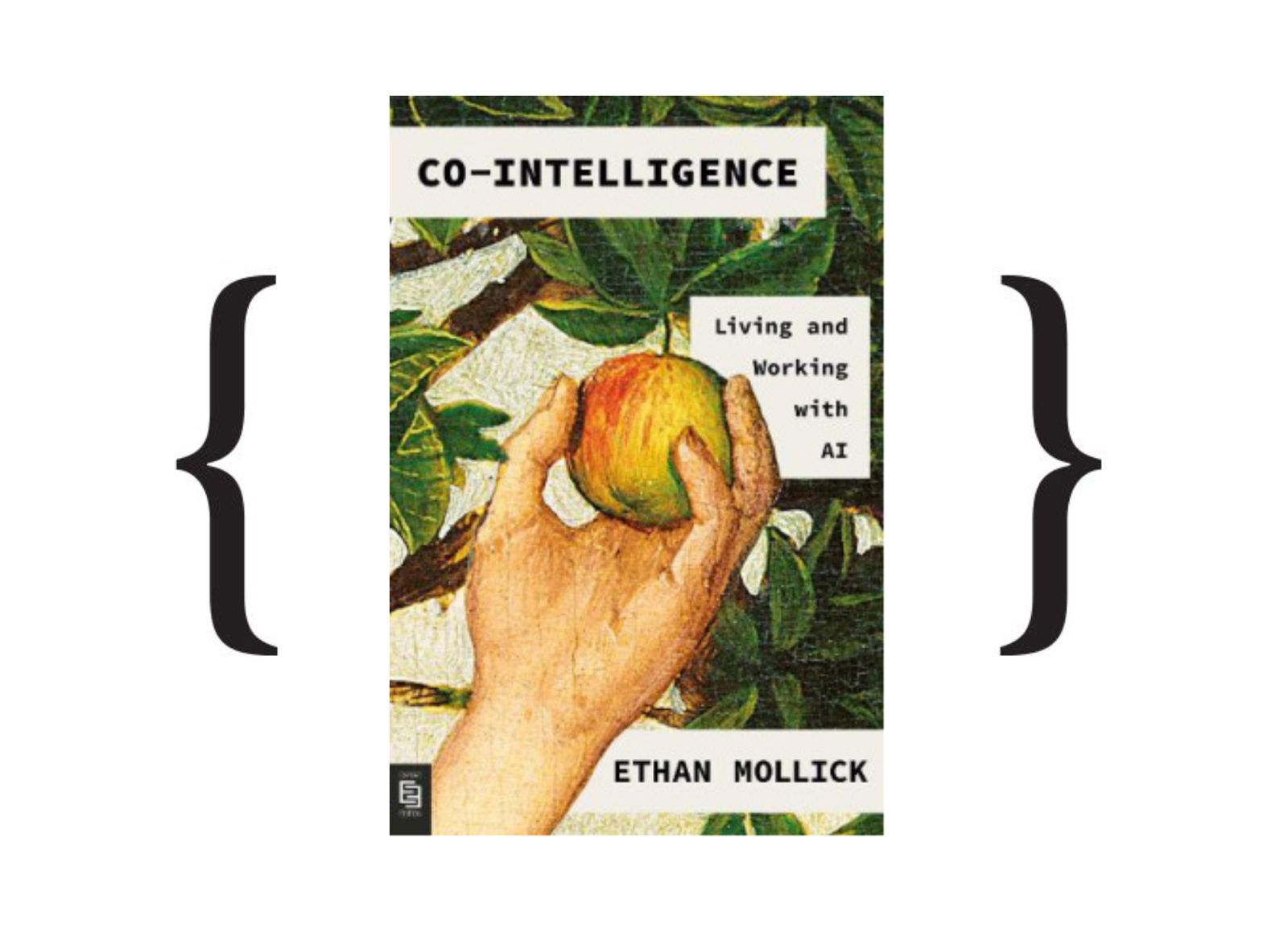
Book Review: Co-Intelligence: Living and Working with AI By Ethan Mollick
Co-Intelligence: Living and Working with AI By Ethan Mollick
Beyond Rhetoric: Books on Ideas Reshaping the Business of Business
Published in 2024, Ethan Mollick’s Co-Intelligence: Living and Working with AI could easily be dismissed as already out of date, such is the pace at which artificial intelligence is evolving. That would be a mistake. While some of its examples inevitably belong to an earlier stage of the AI story, the book’s core arguments have held up remarkably well, which perhaps explains why it continues to lead book-list rankings and remains widely regarded as one of the best books available for those trying to understand what AI means for the future of work.
Mollick’s central thesis is simple. AI is most usefully understood not as a replacement for human intelligence, but as a collaborator. A co-intelligence. Something that can help us think, write, analyse, learn and create. Provided, of course, that we use it with care.
Rather than treating AI as either salvation or threat, Mollick presents it as a practical working reality. He explores how it can act as a tutor, co-writer, critic, researcher and assistant, and he does so in a way that is readable, grounded and refreshingly free of unnecessary theatre and metaphors. This is not a technical manual for engineers, nor a breathless piece of futurism preoccupied with weighing dystopia against utopia. It is a book for ordinary professionals trying to understand how to work intelligently in a changing environment, and that is what makes it useful.
What Mollick conveys well is that AI is not just another software tool. It is beginning to shape the conditions under which knowledge work happens. That means the real question is no longer whether people will use it — we are — but how.
That point resonated with me because it reflects something I have already found in my own work. For years, when framing strategy presentations for clients, I used an introductory slide that signalled that what followed was based on “The truth and informed intuition.” In other words, the insights and recommendations that followed were grounded in researched evidence, human interaction, and then interpreted through experience and judgment. Since first adopting ChatGPT in a meaningful way back in 2022, I changed that slide to read: “The truth, informed intuition and intelligent synthesis.”
In many ways, this is Mollick’s core point. AI can help synthesise information, challenge assumptions, test language and accelerate understanding. Used properly, it can improve the quality and speed of thinking. But this does not remove the need for human insight or, more importantly, responsibility. AI may be impressive, but it is not wise. It can generate plausible answers with alarming fluency, but it cannot reliably distinguish between what is merely convincing and what is actually true.
That matters all the more in an age already shaped by fake news, misinformation and disinformation. This is where Co-Intelligence retains its value despite the rapid changes since it was published. AI is only as useful as the quality of the human relationship around it. It is not a substitute for judgment, discernment or accountability. It is a tool, not a solution.
That distinction is easily lost in current business culture, where there is a growing temptation to mistake speed for substance and output for insight. Copying and pasting is not thinking, and ‘slop in’ absolutely results in ‘slop out’. That reality was underlined when Deloitte Australia became embroiled in controversy after generative AI was used in the production of a government report on welfare compliance that reportedly included fabricated court cases, invented quotes and false references. The issue was not the technology, but the failure of human experience, intuition and oversight.
Mollick’s book is helpful not because it overstates what AI can do, but because it encourages readers to build a more mature relationship with it. Curious, experimental and useful, yes, but also disciplined.
The book’s format and structure make it an easy read and highly accessible. But that should not be mistaken for being lightweight. One of the reasons, I suspect, that it has remained so well regarded is precisely because it lowers the intimidation factor without trivialising the subject. For readers like me, who would not class themselves as ‘techies’, that is no small thing.
If there is a limitation, it is simply that the technology is moving faster than publishing can keep up. Some of the detail has inevitably aged. But the broader insight has not. Humans have, of course, worked with machines for a very long time. What is changing now is not the relationship itself, but the intimacy of it. We are entering a period in which machines are beginning to shape not just what we do, but how we think, write, interpret and create. In that sense, many of us are already functioning as a modest form of cyborg — not in the Dr Who science-fiction sense, mercifully, but in the more literal one; humans whose thinking and capability are increasingly extended by technology. Mollick’s contribution is to make that reality feel less abstract, less hyped, more manageable and maybe a little less scary!