



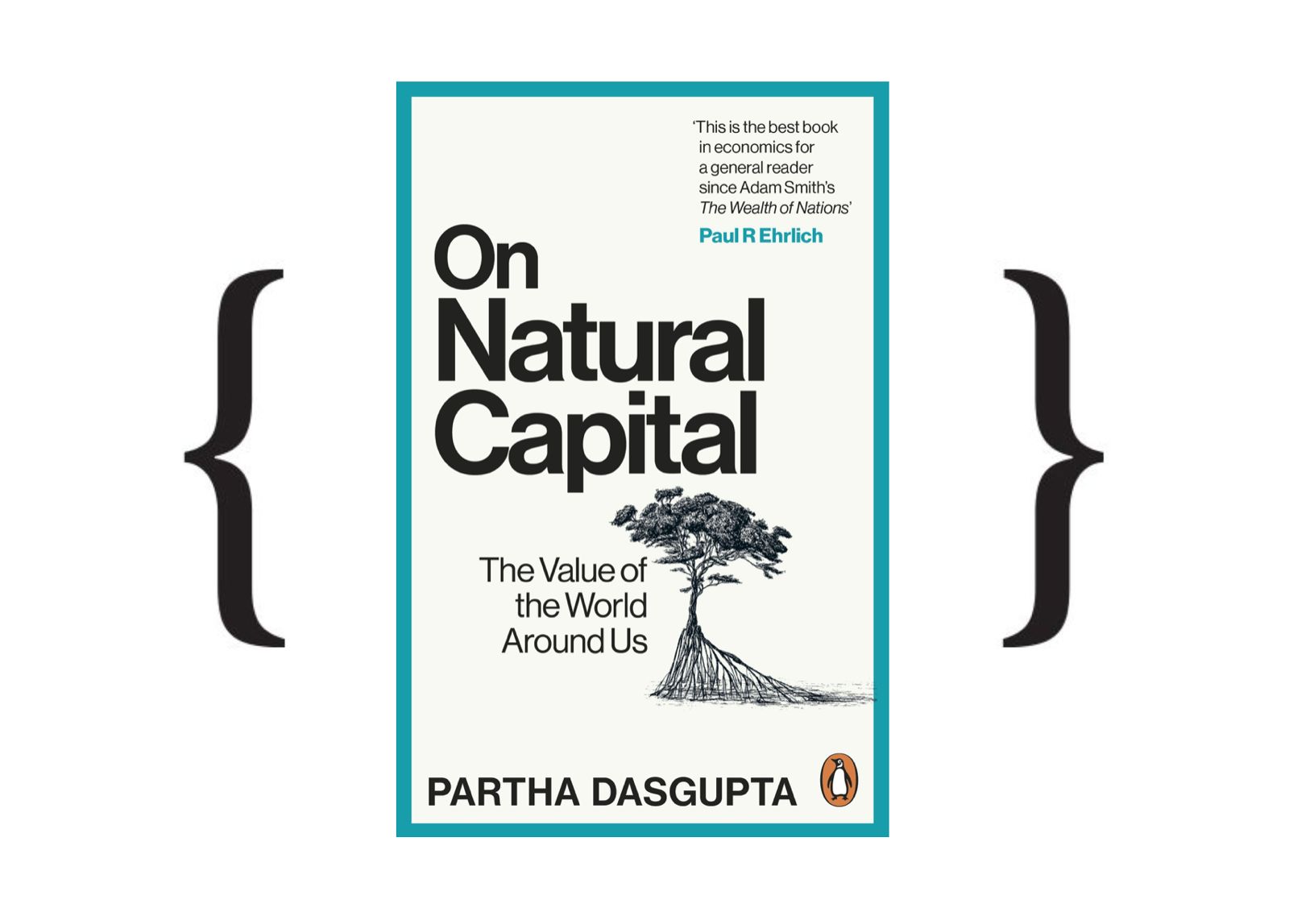
Book Review: On Natural Capital by Partha Dasgupta
On Natural Capital by Partha Dasgupta
Beyond Rhetoric: Ideas Reshaping the Business of Business
There are some books that change what we think. More rarely, there are books that change what we notice. Partha Dasgupta’s On Natural Capital: The Value of the World Around Us belongs firmly in the latter category, for once read, it becomes difficult to look at the modern economy in quite the same way again.
Dasgupta’s central argument is deceptively simple. Nature is not external to the economy. It is the economy’s foundational asset. Forests, oceans, soils, rivers, biodiversity and stable climatic systems are not decorative backdrops to human progress or optional “ESG considerations.” They are forms of capital upon which all human prosperity ultimately depends. The problem, he argues, is that modern economics largely treats them as free and infinite and, as we are all experiencing, the consequences of that oversight are profound.
Published after Dasgupta’s landmark review for the UK Treasury, the book tackles a subject that could easily have become dry, technical or moralistic. Instead, it is remarkably engaging. At times it carries the sweeping perspective and intellectual accessibility of Yuval Harari’s Sapiens, mixed with the curiosity-driven storytelling of Freakonomics and the narrative clarity of Malcolm Gladwell at his best. Like Kate Raworth’s previously reviewed Doughnut Economics (also hugely accessible), it questions whether the assumptions underpinning modern economic growth remain fit for purpose in a finite world.
What makes Dasgupta especially persuasive is that he never approaches the issue as an activist. He approaches it purely as an economist. That distinction matters because rather than simply arguing that humanity should care more about nature, he demonstrates how economic systems systematically fail to account for its depletion. GDP, for example, comes under sustained scrutiny. A nation can cut down forests, exhaust fisheries, degrade soils and pollute rivers while still recording “growth.” By conventional economic measures, the country may appear richer even as its underlying asset base quietly deteriorates. In accounting terms, humanity has become dangerously skilled at consuming principal while congratulating itself on income.
Dasgupta patiently dismantles the illusion using evidence, statistics, stories and easily accessible calculations. One of the book’s greatest achievements is its ability to explain complex economic concepts without ever becoming inaccessible. Even readers who would normally avoid economics or mathematical modelling will likely find themselves following the logic with ease. That is no small accomplishment.
Importantly, the book never collapses into technocracy. Running throughout it is a deeper exploration of psychology, morality and intergenerational responsibility. Human behaviour, social norms and cultural values matter because economics, ultimately, is an expression of what societies choose to value.
One passage in particular captures the book’s moral centre:
“We imbue our children with values we cherish and teach them the practices we believe are right not merely because we think it is good for them, but also because we desire to see our values and practices survive.”
That idea lingers long after the final page. Natural capital is not simply about conservation. It is about stewardship. About whether one generation sees itself as owner, consumer, custodian or, as Dasgupta puts it, ‘asset managers’ of the systems upon which future generations depend.
There is also something quietly radical about the book’s framing of business and leadership. Increasingly, the organisations likely to endure in the decades ahead may be those capable of understanding that long-term value creation cannot be separated from the health of the ecological and social systems within which they operate. The language of stewardship, once viewed as soft or peripheral, begins to look less idealistic and more economically rational.
In that sense, Dasgupta’s work sits within a growing body of thinking challenging the narrow shareholder primacy that has shaped much of modern capitalism over recent decades. The implication is not anti-growth. Nor is it anti-business. Rather, it is that genuine prosperity depends on understanding the difference between extracting value and sustaining the conditions that make value possible in the first place. That is a subtle but important distinction.
If there is a criticism, it is perhaps that the scale of the challenge can occasionally feel overwhelming. The systems Dasgupta describes are deeply embedded politically, economically and psychologically. Yet the book avoids fatalism. Instead, it leaves the reader with a renewed sense that economics is ultimately a human construct, and therefore capable of being redesigned.
On Natural Capital is an important book because it reframes the environmental decline we are all witnessing not simply as an ecological issue, but as a profound failure of economic logic and moral imagination. It asks readers to reconsider what wealth actually means, what societies choose to measure and, ultimately, what kind of asset managers we are.


When Purpose Meets Power
When Purpose Meets Power
This week, in a California courtroom, two of the most powerful figures in modern technology fought over a question that may help shape the future of humanity itself.
On the surface, the case centred on the governance and direction of OpenAI. But beneath the legal arguments lay something far larger; who gets to shape the technologies now influencing how billions of people live, work, think, communicate and increasingly understand the world around them.
For all Silicon Valley’s wealth, brilliance and mythology, it remains a remarkably small bubble of power. Yet over the past two decades, decisions made there have profoundly reshaped politics, culture, economies, attention spans, human relationships and public trust itself through the rise of social media, smartphones, algorithms and now artificial intelligence.
At the centre of that bubble, Elon Musk and Sam Altman found themselves arguing not merely about technology or ownership, but about purpose.
Musk argued that OpenAI had abandoned its original mission as a non-profit organisation created to develop artificial intelligence for the benefit of humanity. OpenAI, led by Sam Altman, successfully defended itself, with the court dismissing Musk’s claims largely on procedural grounds, ruling they had been filed too late.
Legally, OpenAI won. But strategically and philosophically, the case leaves behind a much bigger question for us all to ponder. What happens when purpose collides with scale, competition and capital?
OpenAI was founded in 2015 as a non-profit research organisation with an unusually ambitious mission to ensure artificial general intelligence benefited humanity as a whole rather than a small number of corporations or governments. That aspiration was not peripheral to the organisation. It was the organisation.
Yet within a decade, OpenAI had evolved into one of the most commercially powerful companies in the world, attracting vast investment, building deep partnerships with Microsoft and reportedly positioning itself for a future valuation approaching US$1 trillion.
In fairness, there is a practical reality here. Developing frontier AI requires extraordinary amounts of capital, infrastructure and talent. The costs are staggering. The argument from OpenAI’s leadership is that remaining purely non-profit was simply unrealistic and never commercially sustainable at the scale required to compete globally.
This is where the story becomes relevant far beyond artificial intelligence. Because many organisation begin life animated by an ideal. A belief. A cause. A desire to change something meaningful in the world. But as they grow real world pressures accumulate. Investors demand returns. Markets become more competitive. Governance becomes more complex. Scale introduces compromise and slowly, almost imperceptibly, the centre of gravity begins to shift. Purpose, once the organising idea, becomes the supporting narrative.
“The real goal of my companies is to maximise the possibility that humanity has a great future.”
Elon Musk, January 22nd, 2026
This is not confined to technology. It happens across sectors. Businesses launch with a mission to improve health, strengthen communities, transform education, build better homes or accelerate sustainability. Yet over time, commercial mechanics often begin to dominate the very purpose that originally drove initial interest in them.
The irony is that this frequently happens not because leaders are malicious, but because because growth, scale and commercial pressure exert their own gravitational force.
That matters because we are moving further into an era in which trust, legitimacy and long-term resilience are becoming increasingly tied to whether organisations are genuinely aligned to what they claim to stand for.
Recent research continues to reinforce this reality. Studies increasingly show that purpose-driven organisations outperform peers in areas ranging from employee engagement and customer loyalty to innovation, resilience and long-term financial performance. At the same time, public scepticism toward corporate rhetoric continues to grow. The gap between what organisations say and what they actually do is now under far greater scrutiny than it was even five years ago.
Artificial intelligence intensifies that tension dramatically. Unlike many previous technologies, AI does not merely influence products and services. It has the potential to reshape labour markets, political systems, education, creativity, security and even human relationships themselves.
Decisions made by a remarkably small group of organisations and individuals may affect billions of people.
Which is why the OpenAI case matters. Not because Elon Musk lost. Nor because Sam Altman won. But because it exposed, in full public view, one of the defining leadership tensions of our age — whether organisations can remain genuinely aligned to their founding purpose and be commercially successful.
The organisations that succeed in the coming decade are unlikely to be those that simply speak most loudly about purpose. We are moving beyond that phase now. Purpose itself is becoming operational, measurable and increasingly tied to governance, systems and decision-making.
Nor does commercial success require organisations to abandon purpose as they grow. In many cases, the opposite may prove true.
Some of the world’s most commercially successful organisations have demonstrated that a clearly defined purpose can help shape innovation, attract talent, build trust, strengthen resilience and create long-term competitive advantage. Companies such as Patagonia, Unilever and Musk’s Tesla have shown that commercial ambition and broader societal contribution are not necessarily opposing forces when aligned effectively.
The challenge is not whether organisations can be commercially successful whilst remaining purpose-driven. The challenge is whether leaders possess the discipline, governance and courage required to ensure that purpose continues to shape direction, priorities, incentives and behaviour as commercial pressures intensify.
That is where many organisations struggle. Because purpose is relatively easy to articulate when conditions are favourable. The real test comes when growth accelerates, investors apply pressure, markets shift and difficult trade-offs emerge. In those moments, purpose stops being rhetoric and starts becoming governance.
The real differentiator in the years ahead will therefore be whether organisations can maintain coherence between ambition, behaviour, incentives and long-term consequence as scale and complexity increase.
In other words, whether purpose remains the organising idea, or merely the origin story.
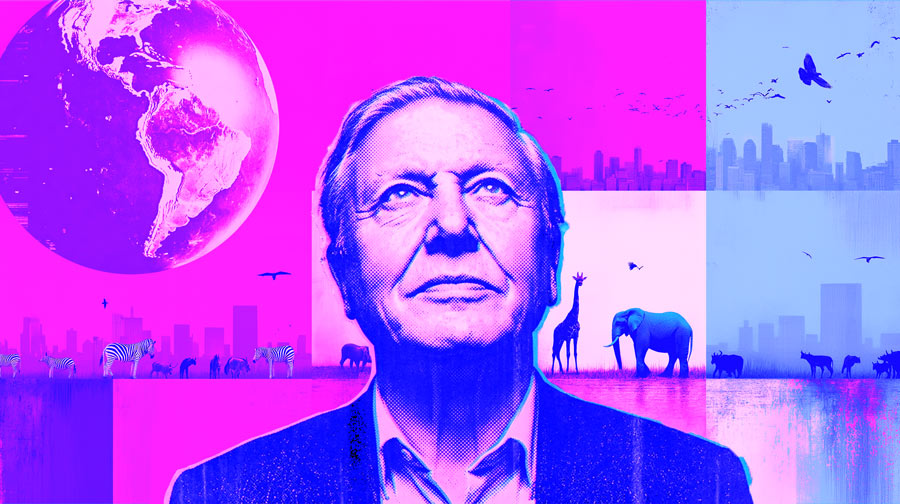
David Attenborough at 100: The Voice That Changed the Conversation
David Attenborough at 100: The Voice That Changed the Conversation
Last week, Sir David Attenborough turned 100. An extraordinary milestone for a man whose life’s work has shaped not only how we see the natural world, but also how we think about leadership, responsibility and the future of human progress itself.
The coverage has been immense, and rightly so. Over more than seven decades, Attenborough has become one of the most recognised and trusted public figures on the planet. His documentaries have reached hundreds of millions of people globally and, in many respects, created an entirely new category of public consciousness around nature and environmental decline.
Yet what makes Attenborough so remarkable is not simply longevity or popularity. It is influence. Very few individuals can credibly claim to have shifted the behaviour of governments, businesses and entire populations without ever standing for office, leading a corporation or seeking ideological confrontation. Attenborough achieves something far more difficult. He makes people care.
I have been fortunate enough to encounter his influence up close on more than one occasion. In 2017, I attended a private screening of Blue Planet II at WWF’s UK headquarters in Woking. The room was filled not with environmental activists, but business leaders, advisers and communicators. As I recall, the atmosphere was unusual. Quiet. Reflective. At times, distinctly uncomfortable. I remember leaving with a peculiar feeling of guilt. How could we have let this happen?
The series would go on to trigger what became known as “The Blue Planet Effect”, a measurable shift in public awareness and behaviour, particularly around plastic pollution. Following its release, environmental charities experienced major spikes in engagement, governments began exploring bans on certain single-use plastics, and businesses realised that public sentiment around sustainability was hardening into accountability. For sometime I would often start my keynote addresses and workshops with a short clip from Blue Planet II.
It was not the first time visual storytelling had changed the environmental conversation. More than a decade earlier, Al Gore’s An Inconvenient Truth performed a similar role for climate change. The film took what had largely been treated as scientific abstraction and transformed it into something emotionally immediate and politically unavoidable. Whatever one’s politics, it shifted public discourse.
Attenborough does something similar, but differently. Where Gore brings urgency through argument, Attenborough brings it through wonder, witness and storytelling that entertains as well as informs. That distinction matters.
Because unlike many campaigners, Attenborough rarely approaches the issue through accusation or ideology. His method is subtler and arguably more effective. Wonder first. Consequence second.
Through an approach perfected over decades, he invites humanity to fall back in love with nature and the living world before explaining what is happening to it. As he once observed:
“No one will protect what they don’t care about, and no one will care about what they have never experienced.”
That may be one of the most important leadership lessons of the modern era.
One of the reasons Attenborough’s influence endures so powerfully is precisely because of the manner in which he exercises it. He is never bombastic. Never self-righteous. Never performative.
In an age shaped by social media algorithms that reward outrage, tribalism and uninformed simplistic certainty, Attenborough’s approach remains remarkably measured. Mild in tone. Humble in manner. Curious rather than ideological.
He speaks not like a politician or activist demanding allegiance, but like a trusted guide inviting people to look more closely at the world around them.
That quiet credibility is one of his greatest strengths. Here is a man who has spent a lifetime celebrating the beauty of the natural world calmly explaining, almost with sadness rather than anger, the scale of the damage humanity is causing to it.
Perhaps that is why I left the WWF screening feeling angry with myself. Not because Attenborough attempts to provoke guilt or outrage, but because his restraint somehow makes the reality harder to dismiss. The absence of moral grandstanding leaves nowhere to hide. It creates a different kind of accountability. One rooted not in ideology, but in conscience.
I was reminded of this again years later at COP26 in Glasgow, where I caught sight of him while attending the conference in connection with an SOI® related fringe event I was delivering. Amid the noise, politics, security and spectacle that inevitably surround gatherings like COP, his presence there felt oddly different. Calmer somehow. More grounded. Less interested in positioning than truth.
It is this, perhaps more than anything else, that allows him to transcend politics in a way few public figures ever manage to do.
Today the World Economic Forum (WEF) consistently ranks environmental risks among the greatest threats to long-term economic stability. Global green investment has climbed into the trillions annually. Consumers increasingly reward brands perceived as sustainable and punish those seen as performative. Investors ask harder questions. Progress-minded regulators are becoming less patient and young people increasingly want to work for organisations that stand for something purposeful that goes beyond simply generating profit for owners and shareholders.
And yet, during the very same week the world celebrated Attenborough turning 100, many of the world’s largest oil and weapon producing companies once again reported enormous profits.
That tension says a great deal about the age we are living through. On one side sits growing scientific clarity, ecological pressure and public awareness. On the other sits an economic system still heavily dependent on the very activities that perpetuate the issues facing our planet. Add rising geopolitical instability, political division and short-termism, and it becomes obvious why progress feels slow and indifference takes hold.
This is precisely why Attenborough’s lifelong quest matters.
Because throughout all of this incredible upheaval we are collectively experiencing, he remains calm. Rational. Evidence-led. Hopeful without being naive.
Fundamentally, he understands and demonstrates something many leaders today clearly struggle with. That lasting change is rarely created through fear alone.
Purpose, at its best, works in much the same way. It is not about moral theatre or corporate virtue signalling. Nor is it about pretending businesses exist solely to solve societal problems. Organisations must still perform commercially. They must innovate, compete and generate returns.
That has profound implications for leadership. Because the defining challenge facing many organisations today is no longer whether they can generate growth, but whether they can do so responsibly, credibly and sustainably in a world that is becoming more transparent, more connected and less forgiving of contradiction.
Purpose sits at the centre of that challenge. Not as corporate theatre. Not as branding. But as a means of aligning commercial ambition with long-term responsibility, wellbeing and consequence.
Attenborough understands something fundamental about humans — that people rarely protect or value what they feel disconnected from and that, at its heart, purpose is really about building connections. Whether in business, society or nature, a sense of shared purpose begins with emotional connection, trust and understanding.
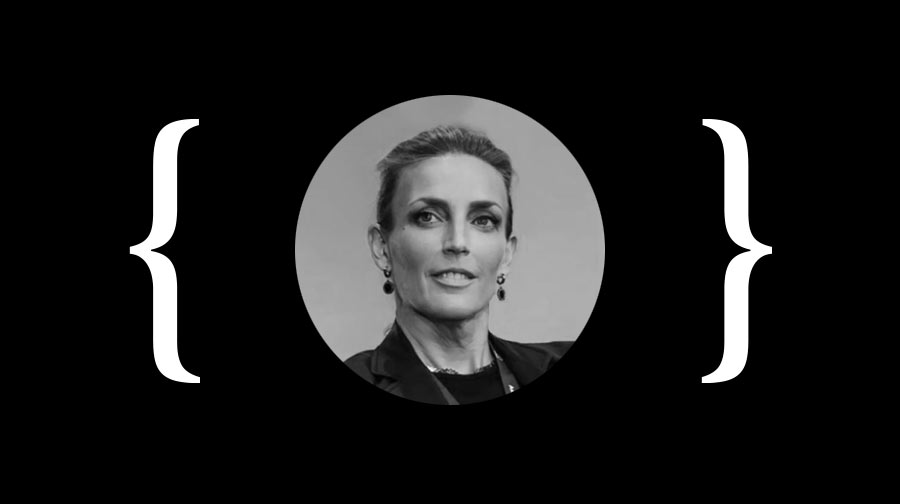
Neil Gaught On Purpose: In Conversation with Dr Victoria Hurth
Neil Gaught On Purpose:
In Conversation with Dr Victoria Hurth
Neil Gaught On Purpose: In Conversation is a monthly interview series featuring leaders, thinkers and practitioners at the forefront of purpose-driven business.
Each conversation goes beyond the rhetoric to explore how purpose is being applied in practice, across strategy, governance, culture and performance.
At a time of growing complexity and uncertainty, the series brings together diverse perspectives to examine a simple but increasingly urgent question: What does it take to build a business that creates enduring value for both shareholders and society?
Dr Victoria Hurth is a leading authority on purpose-driven business and the author of Beyond Profit. She is also a central figure in the development of ISO 37011, the first international standard designed to embed purpose into organisational governance. Her work challenges traditional economic thinking, arguing that business must move beyond profit as an end goal and instead serve long-term wellbeing for all.
NG: You’ve been at the forefront of redefining the role of business in society. What first led you to question the profit-first model?
VH: I’m not sure I ever accepted it. Even as a child, I noticed a disconnect between what people said mattered, connection, community, nature, and the decisions they made, which often prioritised wealth and status. That tension stayed with me.
Over time, I came to see that treating profit as if it were the goal is a foundational flaw. My work has been about understanding that contradiction and helping to resolve it.
NG: What is the most important shift in thinking you hope leaders take from your recently published book Beyond Profit?
VH: That money is not an end goal, it’s a means. The true goal of an economy is collective long-term wellbeing.
Once you recognise that, it becomes clear that we’ve built a system that often works against its own purpose. We focus organisations on profit as if it were the objective, based on the assumption that wellbeing will follow. Increasingly, the evidence suggests the opposite.
The shift, then, is from governing for financial outcomes and hoping for positive societal impact, to governing explicitly for long-term wellbeing, with financial performance as a necessary, but secondary, result. This is how we start stemming the harm and unleashing the best of our innovative capacity.
NG: Why do so many organisations struggle to translate purpose into practice?
VH: Partly it’s a misunderstanding of what purpose actually means. But more fundamentally, it’s a governance issue.
Most organisations are still operating within a system that prioritises short-term financial returns. In that context, purpose gets reshaped to fit this logic, it is effectively pulled back into the logic it is meant to challenge.
That’s why so much purpose work feels superficial. Without changing the foundations (how decisions are governed), purpose cannot take hold. It remains an idea, rather than becoming a discipline that shapes all decisions and action. However, despite all the washing, people keep returning to purpose, and will do, because it’s the only concept that is designed to create good lives for everyone, into the future.
NG: What is ISO 37011, and why does it matter now?
VH: ISO 37011 is the first international standard on purpose-driven organisations. It sets out how organisations can govern their decisions so that they both create, and at the same time, do not harm, collective long-term wellbeing.
Its importance lies in providing a shared, globally agreed understanding of what purpose-driven governance actually looks like in practice. Without that, purpose risks remaining vague, inconsistent, or open to misuse and we will continue to create serious problems that we are then tied down trying to resolve (but inadvertently making the situation worse).
In many ways, ISO 37011 represents a shift from purpose as aspiration to purpose as an operational and governance discipline; something that can be applied, assessed and improved over time.
NG: How does ISO 37011 help operationalise purpose?
VH: Standards bring precision and clarity that can be questioned and improved. ISO standards define terms clearly and set out specific principles and practices shaped through a highly refined and rigorous global consensus process, by up to 174 countries.
ISO 37011 helps organisations diagnose the gap between their current approach to governance and what purpose-driven governance requires. That clarity is critical as it allows leaders to see where change is needed and to align strategy accordingly.
What follows is a more disciplined and effective approach to decision-making, where effort is directed towards closing that gap over time and the hard choices are faced head on – rather than ignored and left to create more issues.
NG: What does good look like when purpose is genuinely embedded?
VH: It means that purpose guides all decisions so that an organisation is operating in its fullest capacity to ‘do good’ (e.g. drive and not harm long-term wellbeing for all) and remain a health going concern in the process.
It does this through governance which means three core things: direction, oversight of this direction and accountability for it. In other words, an organisation defines the value it exists to generate and protect which are aligned with long-term wellbeing for all, ensures decisions and processes align with that direction, and holds itself accountable for the decisions it makes.
While there are no perfect examples yet due to the absence of clarity, it is important that we now have a clear model of what organisations should be working towards.
NG: What are the most common mistakes leaders make?
VH: The most common mistake is trying to apply purpose within an unchanged governance system. If decision-making is still driven by short-term self-interest, then an organisation cannot be purpose-driven, because its decisions won’t be geared for this.
A related issue is the belief that words, initiatives or even hiring purpose-driven people will be enough. Without embedding purpose into governance and strategy, purpose just cannot endure.
Ultimately, if purpose is not shaping decisions through governance (or genuinely on the journey to), then it is not yet part of how the organisation operates, and an organisation claiming they are purpose-driven will be purpose-washing.
NG: How do you see the role of business evolving over the next decade?
VH: There are two broad paths.
One is a continuation of the current trajectory — greater instability, increasing regulation, resource constraints and widening inequality, all of which place growing pressure and drag on businesses and the systems they operate within.
The alternative is a shift towards purpose-driven governance, where business becomes intentional about addressing the challenges that matter most to society and not inadvertently creating harm, and lobbying for government and all other organisations to be governed with the same frame.
Which path we take will depend largely on whether leaders recognise that the current model is broken—and act accordingly. The decisions being made now are critical and we need all leaders to step up.
NG: What is a practical first step for leaders?
VH: Start by questioning your assumptions about business, value and success. From there, build your skills of purpose governance. Use those skills to assess where you and your organisation are today, and define an ambition transforming your personal and organisational governance system to being purpose-driven.
The important thing is to begin and work at the foundational level first. By continuously improving the governance frame, strategy can evolve over time as the frame improves.
Beyond Profit: Purpose-Driven Leadership for a Wellbeing Economy is available at all leading booksellers and online stores.