


Neil Gaught On Purpose:In Conversation with Dr Victoria Hurth
Neil Gaught On Purpose: In Conversation is a monthly interview series featuring leaders, thinkers and practitioners at the forefront of purpose-driven business.
Each conversation goes beyond the rhetoric to explore how purpose is being applied in practice, across strategy, governance, culture and performance.
At a time of growing complexity and uncertainty, the series brings together diverse perspectives to examine a simple but increasingly urgent question: What does it take to build a business that creates enduring value for both shareholders and society?
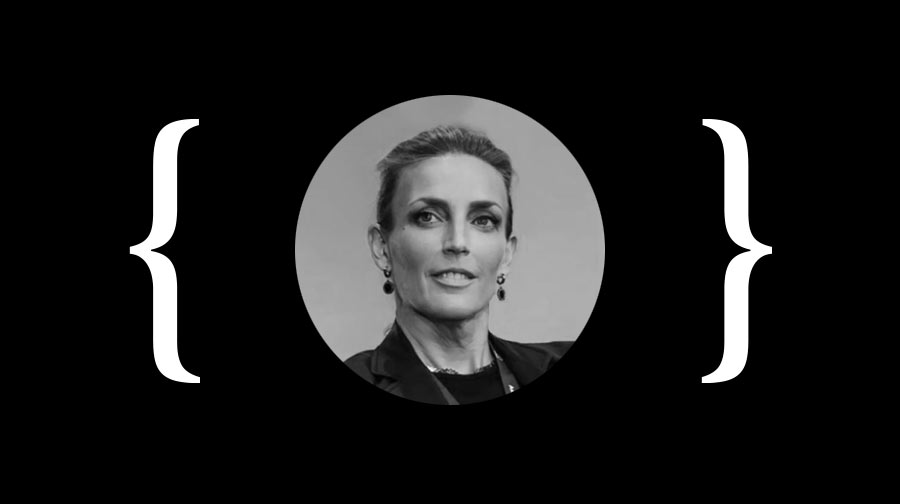
Dr Victoria Hurth is a leading authority on purpose-driven business and the author of Beyond Profit. She is also a central figure in the development of ISO 37011, the first international standard designed to embed purpose into organisational governance. Her work challenges traditional economic thinking, arguing that business must move beyond profit as an end goal and instead serve long-term wellbeing for all.
NG: You’ve been at the forefront of redefining the role of business in society. What first led you to question the profit-first model?
VH: I’m not sure I ever accepted it. Even as a child, I noticed a disconnect between what people said mattered, connection, community, nature, and the decisions they made, which often prioritised wealth and status. That tension stayed with me.
Over time, I came to see that treating profit as if it were the goal is a foundational flaw. My work has been about understanding that contradiction and helping to resolve it.
NG: What is the most important shift in thinking you hope leaders take from your recently published book Beyond Profit?
VH: That money is not an end goal, it’s a means. The true goal of an economy is collective long-term wellbeing.
Once you recognise that, it becomes clear that we’ve built a system that often works against its own purpose. We focus organisations on profit as if it were the objective, based on the assumption that wellbeing will follow. Increasingly, the evidence suggests the opposite.
The shift, then, is from governing for financial outcomes and hoping for positive societal impact, to governing explicitly for long-term wellbeing, with financial performance as a necessary, but secondary, result. This is how we start stemming the harm and unleashing the best of our innovative capacity.
NG: Why do so many organisations struggle to translate purpose into practice?
VH: Partly it’s a misunderstanding of what purpose actually means. But more fundamentally, it’s a governance issue.
Most organisations are still operating within a system that prioritises short-term financial returns. In that context, purpose gets reshaped to fit this logic, it is effectively pulled back into the logic it is meant to challenge.
That’s why so much purpose work feels superficial. Without changing the foundations (how decisions are governed), purpose cannot take hold. It remains an idea, rather than becoming a discipline that shapes all decisions and action. However, despite all the washing, people keep returning to purpose, and will do, because it’s the only concept that is designed to create good lives for everyone, into the future.
NG: What is ISO 37011, and why does it matter now?
VH: ISO 37011 is the first international standard on purpose-driven organisations. It sets out how organisations can govern their decisions so that they both create, and at the same time, do not harm, collective long-term wellbeing.
Its importance lies in providing a shared, globally agreed understanding of what purpose-driven governance actually looks like in practice. Without that, purpose risks remaining vague, inconsistent, or open to misuse and we will continue to create serious problems that we are then tied down trying to resolve (but inadvertently making the situation worse).
In many ways, ISO 37011 represents a shift from purpose as aspiration to purpose as an operational and governance discipline; something that can be applied, assessed and improved over time.
NG: How does ISO 37011 help operationalise purpose?
VH: Standards bring precision and clarity that can be questioned and improved. ISO standards define terms clearly and set out specific principles and practices shaped through a highly refined and rigorous global consensus process, by up to 174 countries.
ISO 37011 helps organisations diagnose the gap between their current approach to governance and what purpose-driven governance requires. That clarity is critical as it allows leaders to see where change is needed and to align strategy accordingly.
What follows is a more disciplined and effective approach to decision-making, where effort is directed towards closing that gap over time and the hard choices are faced head on – rather than ignored and left to create more issues.
NG: What does good look like when purpose is genuinely embedded?
VH: It means that purpose guides all decisions so that an organisation is operating in its fullest capacity to ‘do good’ (e.g. drive and not harm long-term wellbeing for all) and remain a health going concern in the process.
It does this through governance which means three core things: direction, oversight of this direction and accountability for it. In other words, an organisation defines the value it exists to generate and protect which are aligned with long-term wellbeing for all, ensures decisions and processes align with that direction, and holds itself accountable for the decisions it makes.
While there are no perfect examples yet due to the absence of clarity, it is important that we now have a clear model of what organisations should be working towards.
NG: What are the most common mistakes leaders make?
VH: The most common mistake is trying to apply purpose within an unchanged governance system. If decision-making is still driven by short-term self-interest, then an organisation cannot be purpose-driven, because its decisions won’t be geared for this.
A related issue is the belief that words, initiatives or even hiring purpose-driven people will be enough. Without embedding purpose into governance and strategy, purpose just cannot endure.
Ultimately, if purpose is not shaping decisions through governance (or genuinely on the journey to), then it is not yet part of how the organisation operates, and an organisation claiming they are purpose-driven will be purpose-washing.
NG: How do you see the role of business evolving over the next decade?
VH: There are two broad paths.
One is a continuation of the current trajectory — greater instability, increasing regulation, resource constraints and widening inequality, all of which place growing pressure and drag on businesses and the systems they operate within.
The alternative is a shift towards purpose-driven governance, where business becomes intentional about addressing the challenges that matter most to society and not inadvertently creating harm, and lobbying for government and all other organisations to be governed with the same frame.
Which path we take will depend largely on whether leaders recognise that the current model is broken—and act accordingly. The decisions being made now are critical and we need all leaders to step up.
NG: What is a practical first step for leaders?
VH: Start by questioning your assumptions about business, value and success. From there, build your skills of purpose governance. Use those skills to assess where you and your organisation are today, and define an ambition transforming your personal and organisational governance system to being purpose-driven.
The important thing is to begin and work at the foundational level first. By continuously improving the governance frame, strategy can evolve over time as the frame improves.
Beyond Profit: Purpose-Driven Leadership for a Wellbeing Economy is available at all leading booksellers and online stores.