


David Attenborough at 100: The Voice That Changed the Conversation
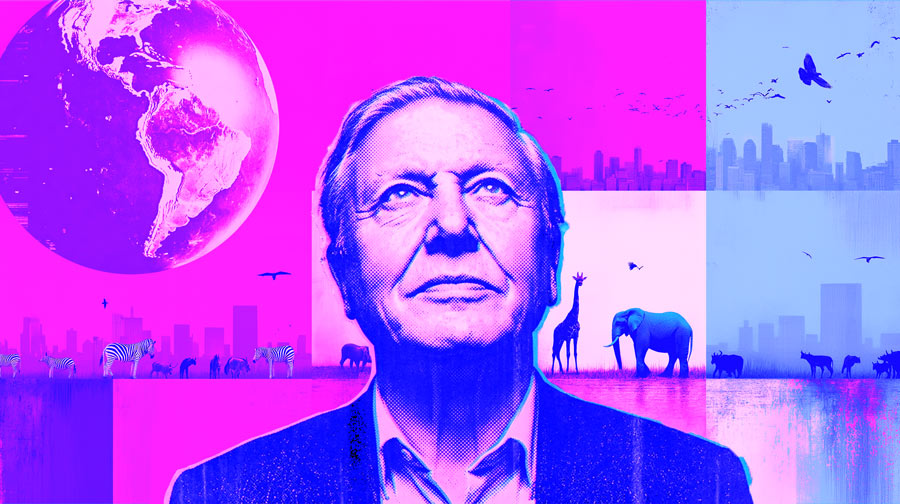
Last week, Sir David Attenborough turned 100. An extraordinary milestone for a man whose life’s work has shaped not only how we see the natural world, but also how we think about leadership, responsibility and the future of human progress itself.
The coverage has been immense, and rightly so. Over more than seven decades, Attenborough has become one of the most recognised and trusted public figures on the planet. His documentaries have reached hundreds of millions of people globally and, in many respects, created an entirely new category of public consciousness around nature and environmental decline.
Yet what makes Attenborough so remarkable is not simply longevity or popularity. It is influence. Very few individuals can credibly claim to have shifted the behaviour of governments, businesses and entire populations without ever standing for office, leading a corporation or seeking ideological confrontation. Attenborough achieves something far more difficult. He makes people care.
I have been fortunate enough to encounter his influence up close on more than one occasion. In 2017, I attended a private screening of Blue Planet II at WWF’s UK headquarters in Woking. The room was filled not with environmental activists, but business leaders, advisers and communicators. As I recall, the atmosphere was unusual. Quiet. Reflective. At times, distinctly uncomfortable. I remember leaving with a peculiar feeling of guilt. How could we have let this happen?
The series would go on to trigger what became known as “The Blue Planet Effect”, a measurable shift in public awareness and behaviour, particularly around plastic pollution. Following its release, environmental charities experienced major spikes in engagement, governments began exploring bans on certain single-use plastics, and businesses realised that public sentiment around sustainability was hardening into accountability. For sometime I would often start my keynote addresses and workshops with a short clip from Blue Planet II.
It was not the first time visual storytelling had changed the environmental conversation. More than a decade earlier, Al Gore’s An Inconvenient Truth performed a similar role for climate change. The film took what had largely been treated as scientific abstraction and transformed it into something emotionally immediate and politically unavoidable. Whatever one’s politics, it shifted public discourse.
Attenborough does something similar, but differently. Where Gore brings urgency through argument, Attenborough brings it through wonder, witness and storytelling that entertains as well as informs. That distinction matters.
Because unlike many campaigners, Attenborough rarely approaches the issue through accusation or ideology. His method is subtler and arguably more effective. Wonder first. Consequence second.
Through an approach perfected over decades, he invites humanity to fall back in love with nature and the living world before explaining what is happening to it. As he once observed:
“No one will protect what they don’t care about, and no one will care about what they have never experienced.”
That may be one of the most important leadership lessons of the modern era.
One of the reasons Attenborough’s influence endures so powerfully is precisely because of the manner in which he exercises it. He is never bombastic. Never self-righteous. Never performative.
In an age shaped by social media algorithms that reward outrage, tribalism and uninformed simplistic certainty, Attenborough’s approach remains remarkably measured. Mild in tone. Humble in manner. Curious rather than ideological.
He speaks not like a politician or activist demanding allegiance, but like a trusted guide inviting people to look more closely at the world around them.
That quiet credibility is one of his greatest strengths. Here is a man who has spent a lifetime celebrating the beauty of the natural world calmly explaining, almost with sadness rather than anger, the scale of the damage humanity is causing to it.
Perhaps that is why I left the WWF screening feeling angry with myself. Not because Attenborough attempts to provoke guilt or outrage, but because his restraint somehow makes the reality harder to dismiss. The absence of moral grandstanding leaves nowhere to hide. It creates a different kind of accountability. One rooted not in ideology, but in conscience.
I was reminded of this again years later at COP26 in Glasgow, where I caught sight of him while attending the conference in connection with an SOI® related fringe event I was delivering. Amid the noise, politics, security and spectacle that inevitably surround gatherings like COP, his presence there felt oddly different. Calmer somehow. More grounded. Less interested in positioning than truth.
It is this, perhaps more than anything else, that allows him to transcend politics in a way few public figures ever manage to do.
Today the World Economic Forum (WEF) consistently ranks environmental risks among the greatest threats to long-term economic stability. Global green investment has climbed into the trillions annually. Consumers increasingly reward brands perceived as sustainable and punish those seen as performative. Investors ask harder questions. Progress-minded regulators are becoming less patient and young people increasingly want to work for organisations that stand for something purposeful that goes beyond simply generating profit for owners and shareholders.
And yet, during the very same week the world celebrated Attenborough turning 100, many of the world’s largest oil and weapon producing companies once again reported enormous profits.
That tension says a great deal about the age we are living through. On one side sits growing scientific clarity, ecological pressure and public awareness. On the other sits an economic system still heavily dependent on the very activities that perpetuate the issues facing our planet. Add rising geopolitical instability, political division and short-termism, and it becomes obvious why progress feels slow and indifference takes hold.
This is precisely why Attenborough’s lifelong quest matters.
Because throughout all of this incredible upheaval we are collectively experiencing, he remains calm. Rational. Evidence-led. Hopeful without being naive.
Fundamentally, he understands and demonstrates something many leaders today clearly struggle with. That lasting change is rarely created through fear alone.
Purpose, at its best, works in much the same way. It is not about moral theatre or corporate virtue signalling. Nor is it about pretending businesses exist solely to solve societal problems. Organisations must still perform commercially. They must innovate, compete and generate returns.
That has profound implications for leadership. Because the defining challenge facing many organisations today is no longer whether they can generate growth, but whether they can do so responsibly, credibly and sustainably in a world that is becoming more transparent, more connected and less forgiving of contradiction.
Purpose sits at the centre of that challenge. Not as corporate theatre. Not as branding. But as a means of aligning commercial ambition with long-term responsibility, wellbeing and consequence.
Attenborough understands something fundamental about humans — that people rarely protect or value what they feel disconnected from and that, at its heart, purpose is really about building connections. Whether in business, society or nature, a sense of shared purpose begins with emotional connection, trust and understanding.