



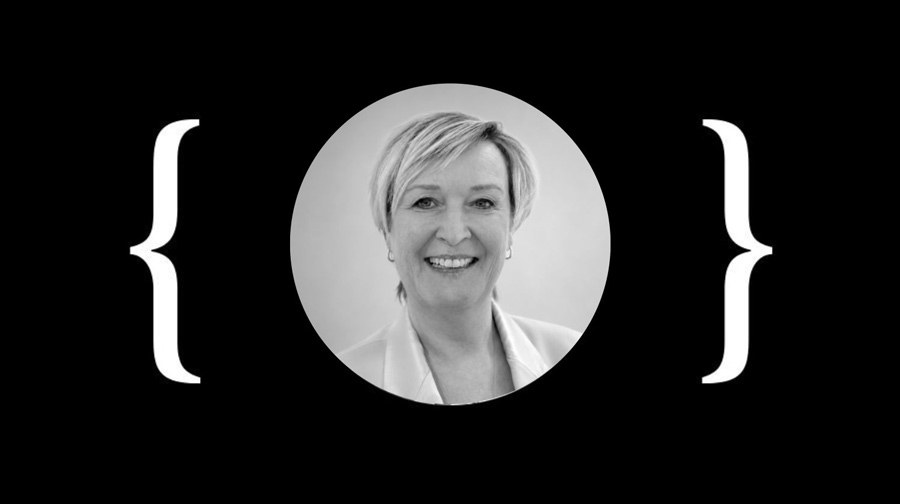
Neil Gaught On Purpose: In Conversation
Neil Gaught On Purpose: In Conversation is a monthly interview series featuring leaders, thinkers and practitioners at the forefront of purpose-driven business.
Each conversation explores how purpose is being applied in practice, across strategy, governance, culture and performance.
At a time of growing complexity and uncertainty, the series brings together diverse perspectives to examine a simple but increasingly urgent question: What does it take to build a business that creates enduring value for both shareholders and society?
Julie Gill is the Founder and CEO of Best Places to Work™, which she helped relaunch in 2023 with an ambition that goes well beyond recognising great employers. Driven by a belief that strong organisations and positive workplace experiences go hand in hand, Julie is building BPTW as a continuous improvement platform that helps organisations listen to their people, understand what shapes their experience and turn that insight into better leadership, culture and performance. Her wider ambition is simple but bold: to help Aotearoa New Zealand become one of the best places in the world to work, “floating all the boats higher” in the process.
NG: Julie, before we talk about Best Places to Work™ (BPTW), I’d like to start with you. What has driven your interest in people, workplaces and organisational culture, and where did the idea that work could, and should, be better first come from for you?
JG: I’ve always been fascinated by people and the difference they can make to an organisation, but equally, the difference an organisation can make to people.
We spend such a significant part of our lives at work, so the workplace experience matters. It affects our confidence, our wellbeing, our families and communities, as well as what we’re able to contribute professionally.
Over the years, I’ve seen organisations with very similar resources and opportunities achieve very different outcomes. Often, the difference comes back to people, leadership and culture.
When people understand why they’re there, know what’s expected of them, feel valued and trusted, and have the right environment around them, they can do extraordinary things.
That’s really where my interest comes from. I don’t see creating a positive workplace experience and creating a strong organisation as two separate things. They go hand in hand.
Because when people love where they work, everything changes. For them, for the organisation and, collectively, for Aotearoa New Zealand.
NG: BPTW has been part of the Aotearoa New Zealand business landscape for two decades and was relaunched in 2023. What did you see happening in the world of work that convinced you the time was right to bring it back?
JG: Best Places to Work has been part of New Zealand for more than 25 years. After a short hiatus, we brought it back three years ago because work had changed enormously, and people’s expectations of work had changed with it.
We’d come through COVID. Flexible and hybrid working had accelerated. Wellbeing and purpose had become a much more serious workplace conversation. And people were asking different questions of their employers.
Not just, “What do you pay me?” but, “Do I belong here? Does my work have meaning? Can I grow here? Does my voice matter?”
At the same time, organisations were trying to understand what all of that meant in practice.
So we brought BPTW back with the same mission: to float all the boats higher and lift the standard of workplace experience across New Zealand.
But we also had an opportunity to build something much broader – a continuous improvement programme built around employee voice, insight, benchmarking, learning and recognition.
Although the Best Places to Work™ Awards are an important part of inspiring leaders and celebrating the exceptional work happening in organisations across Aotearoa New Zealand, our ambition goes further.
Ultimately, we want to inspire New Zealand to be the best place to work in the world!
NG: BPTW talks about its mission as “floating all the boats higher.” I love that phrase. What does it mean to you, and what does it tell us about what you ultimately want BPTW to achieve beyond simply recognising great employers?
JG: I love that phrase because it really captures what we’re trying to do.
Of course we want to recognise and celebrate the best workplaces. We want to tell their stories and showcase the leadership, teams, cultures and innovation within New Zealand organisations.
“Floating all the boats higher” is about lifting the standard of employee experience across Aotearoa New Zealand.
An organisation might hear through its employee feedback that there’s an issue around trust, workload, communication or leadership. We don’t see that as failure. We see it as a signal.
You now know something you didn’t know before, and you have an opportunity to do something about it.
That’s why continuous improvement is so important to us. Success isn’t only seeing the best workplaces continue to perform strongly. It’s seeing organisations listen to their people, understand where to focus, make changes and come back a year later having improved.
If we can help organisations of various sizes right across New Zealand make meaningful improvements year after year, the collective impact can be significant.
That’s what “floating all the boats higher” is all about.
NG: We often talk about a “best place to work” as though we instinctively know what one looks like. From everything you have learned through BPTW, what actually separates the best workplace from an organisation that simply has good benefits, good intentions or a strong employer brand?
JG: For me, the biggest distinction is that an exceptional workplace is something people experience every day. It’s not something an organisation can simply say about itself.
It shows up in the everyday things: how your manager speaks to you, whether you understand what’s expected of you, whether you trust the decisions being made, whether you feel confident speaking up, whether your workload is manageable, whether you understand where the organisation is going and the part you play in getting there.
Those experiences matter.
That’s also why our Employee Experience Survey looks across the nine BPTW Pillars of Workplace Experience, with each question aligned to those pillars.
So we’re not simply measuring how people feel. We’re understanding the conditions and behaviours that shape their experience.
What we see in the best workplaces is consistency. People understand the purpose and direction of the organisation. Leaders communicate and listen. People feel trusted and supported. They feel connected to their teams and have the environment, tools and clarity they need to perform well.
And none of that means everything is perfect.
For me, one of the hallmarks of an exceptional workplace is being willing to listen to your people, understand what the signals are telling you and keep learning and improving.
NG: There is still a tendency in some organisations to regard culture, wellbeing and employee experience as the softer side of business. What have you learned about the relationship between creating a best place to work and harder measures such as performance, productivity, innovation, resilience and retaining good people?
JG: I think separating the “people stuff” from the “business stuff” is increasingly unhelpful.
If people aren’t clear about what they’re trying to achieve, don’t trust their leaders, are consistently overloaded, or don’t feel confident speaking up when something isn’t working, those things will show up in the organisation.
That’s why we think about the connection between experience, behaviour and performance.
Experience shapes behaviour. Behaviour shapes performance. And performance shapes results.
The last few years have brought real pressure for organisations, and that’s when strong foundations, investment in people, and having the right systems and insights matter most.
Employee experience gives leaders valuable information. Where are people performing well? Where is there friction? What might be getting in the way? That makes employee insight useful management information, not simply an annual engagement score.
NG: Purpose has become an increasingly important part of the BPTW approach. What role do you believe a clearly understood organisational purpose plays in creating workplaces where people feel connected, motivated and able to perform at their best?
JG: Purpose can be incredibly powerful, but only when people can see it in the decisions an organisation makes and the way work happens every day.
A beautifully written purpose statement on the wall isn’t enough.
People need to understand: Why are we here? What are we trying to achieve? And how does what I do contribute to that?
When people are clear on purpose, work feels more connected. There’s context around why something matters, people can see the part they play, and decisions become easier because there’s a shared understanding of where you’re trying to go.
For me, purpose becomes particularly interesting when an organisation has to make a difficult decision. Does it influence where you invest? What you prioritise? What you say no to? Who you work with? How leaders behave? What you measure and reward?
That’s where purpose turns into performance.
Through BPTW, we see organisations where employees can draw a very clear line between their everyday work and the difference the organisation is trying to make.
When what an organisation says matters is reflected in what employees actually experience, purpose becomes much more than a statement. It becomes something people can connect to and act on.
NG: BPTW is much more than an annual awards programme and it includes employee insight, certification, learning and access to specialist expertise. How do you see that evolving, and what do you want an organisation’s journey with BPTW to look like?
JG: I want organisations to see BPTW as a workplace improvement partner.
At the heart of the programme is our Employee Experience Survey, because everything starts with listening to your people.
It gives every employee a safe, independent and confidential way to share how work feels, and it gives leaders a clear view of what’s working, where to focus and how their results compare.
Then it’s about what you do with that insight.
For one organisation, that might mean building leadership capability. Another might use Pulse Surveys to understand whether changes are having an impact. Others might access a Masterclass or specialist support, work towards BPTW Certified, or recognise their progress through the Awards.
There isn’t one pathway because organisations are at different stages and have different needs.
What we want to provide is a continuous improvement programme that helps organisations listen, understand, act, measure and improve. Recognition sits alongside that journey, but continuous improvement is at the heart of it.
NG: We have recently begun working together through a partnership between BPTW and NG&A, including around purpose and the emerging ISO 37011 guidance. What opportunity do you see in bringing the workplace and purpose agendas closer together, particularly here in New Zealand?
JG: I think there’s a really interesting opportunity here because purpose and employee experience are deeply connected.
An organisation can have a very clear purpose, but if its people don’t understand it, can’t see how their work contributes to it, or don’t see leaders making decisions consistent with it, there’s a gap between intention and experience.
And purpose needs to do more than make people feel positive about where they work. It should help an organisation make choices, set priorities and be clear about the value it’s trying to create.
That’s what makes the emerging work around ISO 37011 interesting. It brings another level of rigour to how organisations think about purpose and how it translates into governance, strategy and organisational practice.
The opportunity for us is to bring that together with employee voice.
We can look at what an organisation says its purpose is, how that purpose is intended to influence the organisation, and then understand what employees actually experience.
That connection between intention and experience is powerful. It helps turn purpose from something an organisation talks about into something people can see in leadership, decisions and the way work gets done.
NG: Finally, BPTW has an ambition to help make New Zealand one of the world’s best places to work. If we were having this conversation five years from now and you felt that ambition was becoming a reality, what would have changed for employees, organisations and New Zealand as a whole?
JG: I’d want to see improvement at scale.
For employees, we’d want more people to feel that work is a positive part of their lives. That they trust their leaders, understand what they’re contributing to, feel supported to perform at their best, have opportunities to grow and know their voice matters.
For organisations, I’d like employee experience to be treated as seriously as other important business measures.
That doesn’t mean every workplace needs to be perfect. That’s not what BPTW is about.
It’s about listening. Being curious about what your people are telling you. Understanding the signals. Making meaningful changes. Then measuring again and continuing to improve.
And for Aotearoa New Zealand, I’d love the best workplaces to become part of our competitive advantage.
We’re a relatively small country, but I think there’s something very powerful about the way we think about connection here. Connection to people, to place and to the environment around us. Those values can shape the kind of workplaces we create and the kind of leadership we want to be known for.
If we can combine that with workplaces where people are trusted, connected to purpose, encouraged to innovate and enabled to perform at their best, I think New Zealand has an opportunity to lead in its own way.
Not by trying to replicate what the rest of the world is doing, but by building on what is distinctive about Aotearoa New Zealand and showing that strong organisations, positive employee experience and care for people, planet and place can sit alongside each other.
That has an impact far beyond an individual organisation.
It’s good for our people. It strengthens our organisations and our communities. And collectively, it strengthens New Zealand.
That’s ultimately what floating all the boats higher means to me.