




When purpose drives progress, climate isn’t a sideshow
Reflections from the IoD & Chapter Zero Climate Governance Forum
Last week I attended the IoD & Chapter Zero New Zealand Climate Governance Forum in Auckland and joined a room full of board directors, advisors and governance professionals grappling with what climate risk means for the future of business.
The speakers were impressive, the discussion serious. And while I’ve attended and contributed to many such events around the world over the past two decades, it’s always grounding to hear these conversations closer to home. The setting may be different, but as the self-styled ‘Sustainability Champion’ Izzy Fenwick compellingly pointed out, the stakes are just as high.
Reflecting on the day, what struck me most wasn’t what was said — but how I think it is being received.
Climate is a critical issue. But like many others — from AI to inequality — it’s still too often treated as a stand-alone or siloed topic; something for business leaders to be aware of, to be concerned about and maybe even taken into account, but ultimately separate from the core governance of business itself.
In purpose-driven organisations, that separation doesn’t exist. These issues are not peripheral — they are integral to the business’s reason for being, how it is governed and fundamental to long-term relevance and commercial success.
Purpose is not just a soft or symbolic notion, as the IoD’s Judene Edgar eloquently highlights in the autumn issue of the organisation’s Boardroom magazine. Purpose — properly identified, defined and embedded — ensures that complex, interconnected challenges are not treated as trade-offs or compliance burdens that get in the way of business as usual. Instead, it frames them as essential to building a resilient, relevant and competitive organisation in the 21st century.
Just last week, the European Central Bank confirmed it will integrate climate risk into its collateral framework — a clear signal that environmental resilience is no longer a side issue or policy preference. It’s a material governance concern with implications for businesses across the globe. And it’s a timely reminder of how fast expectations are shifting — and how urgently boards must adapt.
A clearly articulated purpose — one that unifies strategy, brand, operations and governance through a strategic framework such as the Single Organizing Idea (SOI®) — isn’t a distraction. It’s a decision-making compass. It empowers boards to lead with integrity, align performance with long-term value and respond to complexity — whether environmental, social, technological or geopolitical — with clarity and confidence.
New Zealand’s businesses have much to offer the world. But first, we must do the work at home — turning purpose from intangible platitudes into tangible, day-to-day business practice and leadership.
The Forum reminded me that understanding may be growing — and that’s encouraging. But there’s still a long way to go. And we don’t have the luxury of time.
Now is the moment to fully inform and empower boards about the power and potential of purpose — not just so they can effectively oversee the future success of their businesses, but so they can help shape the future of the country and the communities their businesses serve and rely on.
That’s not a side conversation. It’s the job.


Stop Whining. Start Winning.
Stop Whining. Start Winning.
When a bodybuilder-turned-movie-star-turned-Governor of California tells the world to “stop whining,” it’s tempting to laugh. But in his recent BBC interview with the formidable Laura Kuenssberg, Arnold Schwarzenegger offered something rare in today’s climate discourse: Clarity.
“Pollution kills people. So let’s terminate pollution.”
And crucially: Stop waiting for permission. Stop making excuses. Get on with it.
It’s a message I — and many others — have echoed often. This week, I spoke at London Climate Action Week, in a session hosted by my friends at PURE360. The focus was purpose and leadership — and the need to move from fluffy brand-led statements of intent (greenwashing) to purpose-led systems of actual, real delivery. It’s the same message I delivered at COP26 in 2021 and at New York Climate Week the year before, where I’ll never forget one of the world’s most renowned economists, Jeffrey Sachs , standing up in front of a small invited audience and saying bluntly, “We need to ****ing get on with it.”
He’s right. As Sachs made clear: We have the tools. We have the technology. We have the know-how — today, right now.
Schwarzenegger’s point is just as blunt: Don’t wait for political consensus. Don’t complain about the government. As Governor, when the federal government tried to block California’s environmental policies, he took them to the Supreme Court — and won.
“Instead of whining… you go to work. Here’s the job. Here’s my responsibility.”
And here’s the clincher: California didn’t just cut pollution — it grew its economy. Today, it ranks as the world’s fourth-largest economy, ahead of Germany and Japan. At the same time, it enforces some of the most progressive and stringent environmental standards anywhere. In other words, taking care of people and the planet isn’t a sacrifice — it’s a winning investment in the here and now — and the future.
Across the Atlantic, the EU is closing in on its 2030 climate target — on track for a 54% emissions reduction, nearly meeting its legally binding 55% goal. The lesson is clear: Economic growth and climate action go hand in hand.
Here in New Zealand, when our largest and most successful business — Fonterra — acts decisively on climate to meet the expectations of its stakeholders, despite its government’s stance on climate change, that’s a signal worth paying attention to. Yet too many business leaders still look to government as the first mover. But short-term political agendas mean they could be waiting a long time — and while they wait, others are seizing the opportunity.
It’s business — with all its enterprise-driving facets, aligned with invested stakeholders, customers, employees, and market forces — that has both the power and the incentive to act. Not just to make a difference, but to benefit from doing exactly that. So let’s get on with it.
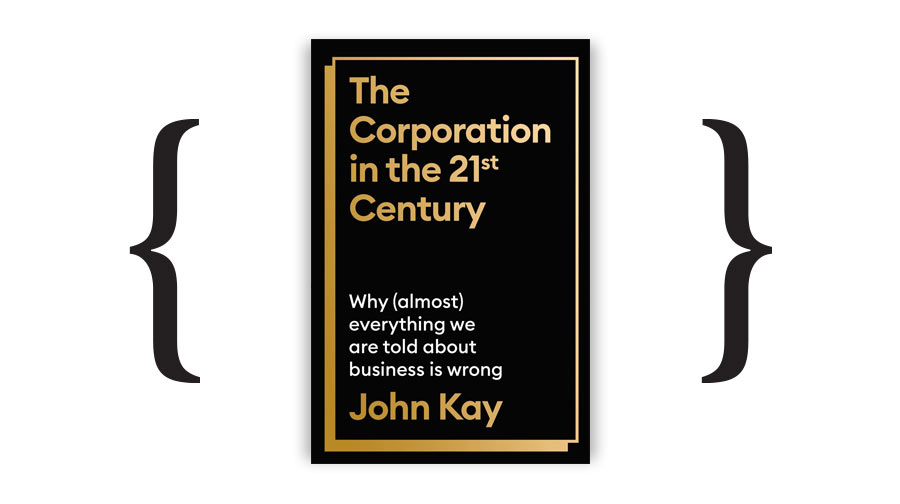
Book Review: The Corporation in the 21st Century: Why (Almost) Everything We are Told About Business is Wrong by John Kay
Book Review: The Corporation in the 21st Century: Why (Almost) Everything We are Told About Business is Wrong by John Kay
There’s something refreshing about a book that calmly dismantles decades of corporate dogma without ever lapsing into polemic. John Kay’s The Corporation in the 21st Century is that kind of book. Kay — economist and longtime observer of business — uses insight, history and a wry sense of irony to show how little of what we’re told about business today actually fits the facts. The result is a sweeping, rich analysis that lands with the quiet authority you’d expect from a long-serving Financial Times columnist.
Kay’s core argument is simple but powerful: The language, assumptions and models that still dominate many a boardroom are relics of a bygone age. When capital meant plant and machinery, ownership meant control. But in today’s economy — where companies like Apple, Amazon and Meta derive value not from what they own, but from the ideas and capabilities of their people — that linkage has broken down.
Kay doesn’t just describe the shift — he quietly skewers those in the ‘business-as-usual’ brigade who continue to ignore it. Take the case of ICI, once a global leader in chemicals and Britain’s largest company. In 1987, it had a mission that stated “…Through the achievement of our aim we will enhance the wealth and well-being of our shareholders, our employees, our customers and the communities which we serve and in which we operate.” By 1994, that had shrunk to a single aim: to maximise shareholder value. It’s this single minded pursuit of profit Kay suggests, that hastened ICI’s decline.
That struck a particular chord. I remember when John Harvey-Jones, the former Chairman of ICI (1982–87), was one of the most recognisable figures in British business. His BBC series Troubleshooter brought business dilemmas into the living rooms of millions and I once saw him speak at an event in London, shortly after starting my first business in 1989. He was inspiring. And in hindsight, he represented a more balanced vision of leadership and governance — one that saw the corporation as a force for good in society.
Kay makes the case that we’ve strayed far from that vision. His damning case studies of GE, Deutsche Bank, Sears and others show how businesses lost their way by pursuing short-term financial returns at the expense of enduring value. As someone deeply involved in the evolving relationship between purpose and profit, I found this part of the book especially resonant. It reinforces a core belief: That the course a business takes is determined not just by strategy, but by what it sees itself for.
This is not nostalgia. Kay makes clear that business must move on. He embraces the shift from material to intangible value — from manufacturing to problem-solving, from command-and-control to collaboration. His admiration for Apple is telling and not for its balance sheet, but for its ideas — and the design ethos that made those ideas real. In that sense, Kay and Patrick Grant (author of Less) arrive at a similar destination — the need for business to rediscover its reason for being beyond simply making money — but by very different routes. While Grant mourns the passing of manufacturing craft, Kay accepts its decline and looks to the power of ideas to shape the future.
If the book has a fault, it’s that it offers few easy solutions. Kay doesn’t lay out a blueprint for the future corporation. Instead, he calls for a change in mindset — one that sees the company not as a transactional bully (we need not follow the USA!), nor a “nexus of contracts,” but as a living system with multiple stakeholders — employees, customers, suppliers, communities — and yes, shareholders too. The goal? Not the maximisation of shareholder value, but the creation of great businesses that serve society and endure.
It’s an argument based on ‘un-common sense’, crisply delivered. And while Kay is unafraid to takedown of corporate icons like Jack Welch, this is not a bitter book. It’s measured, thoughtful and intellectually generous — the work of someone who wants business to do better, because it can.
Ultimately, The Corporation in the 21st Century is a book about realigning our ideas with reality. About recognising that power in the modern economy flows through people, not plant. That ideas, not assets, now drive value. And that the purpose of business — as ICI once understood — must be broader than a quarterly return.

It’s time to celebrate
It’s time to celebrate
It’s time to celebrate who we are, what we do, what we stand for.
We need to find a way of lifting ourselves up as a country, as cities and as regions. We all know its tough out there, we’ve seen the statistics, read the reports, seen the news. We also see it first hand in our daily lives, how life can be tough on our families, friends and colleagues.
But we have so much to also be thankful for and to celebrate. Positively builds energy, energy builds momentum, momentum builds success. So let’s focus on what’s good and make it great. Let’s focus on coming together and lifting each other up so we can all succeed regardless of who we are and what we do.
I recall back in the 1990’s when Wellington was one of the least attractive places in the country. Known as windy, cold and simply dreary…full of government bureaucrats.
But many knew there was more to Wellington and wanted more for it too. That’s when Absolutely Positively Wellington was born, backed by business leaders and the public office. This marked a turning point in Wellington’s identity, confidence, and direction. Five years later it was the coolest place to live, visit and do business, attracting cool people ……it (almost) lost its windy status.
So this is what Auckland now needs too. It is our biggest city and its impact on the rest of New Zealand is undeniable. But it needs its mojo back, people need to be proud to be Aucklanders, and the rest of the country need to be fond of its bigger sibling.
So let’s lift Auckland up, it’s got great people doing great stuff, there is much to celebrate. Yes there’s challenges to address, like everywhere else.
It’s time for Auckland to come together, amplify its greatness, celebrate its success, and embrace the opportunities ahead. This is the only pathway to putting the broken bits of the jigsaw back together, and part of a bigger, ambitious, and positive picture that enables Auckland to once again shine brightly.
And, if Auckland can rise up and do it, then so can the rest of us too.

Reimagining governance: If the future had a board, purpose would be the chair
Reimagining governance: If the future had a board, purpose would be the chair
There’s growing recognition that our governance systems — in business, government and civil society — are not built for the complexity, urgency or interconnectedness of today’s world. But recognition isn’t enough. If we want economies that are more innovative, inclusive and sustainable, we must rewire how value is created — and how it’s governed.
Governance isn’t just a Boardroom issue
Governance has long been framed as risk management and regulatory hygiene. But in a world reshaped by climate shocks, AI disruption, geopolitical volatility and public distrust, that framing is obsolete. Governance must evolve — from control to contribution.
Here in Aotearoa New Zealand, we often speak of our agility, transparency and fairness. Yet many of our institutions still operate with static, siloed systems. Boards focused narrowly on short-term returns. Public agencies locked into linear planning cycles. Stakeholder engagement that’s more performative than participatory. What if we designed our organisations — companies, councils, ministries, co-ops — around a core purpose? A clear, actionable Single Organizing Idea (SOI) that unites decision-making, strategy and culture across silos. A shared north star that governs for long-term contribution, beyond quarterly compliance and political cycles.
This isn’t a utopian vision — it’s a governance design challenge. One that’s gaining traction globally, with new frameworks, metrics and standards reframing how organisations define success and legitimacy in a world that demands more.
Innovation is structural, not just technological
True innovation isn’t just about product breakthroughs or digital tools — it’s about rethinking the systems that allow innovation to flourish. That includes how boards function, how decisions are made, and how responsibility is shared.
Spencer Stuart’s Closing the Confidence Gap report makes this clear: Fewer than 1 in 4 CEOs believe their boards are providing the support they need to lead through rapid change. And while Directors believe they are offering the right mix of oversight and expertise, CEOs disagree — citing a lack of strategic partnership, contextual knowledge and space for honest, forward-looking dialogue.
In short: We have a perception gap. And it’s undermining innovation.
Give purpose a seat at the table
If we want governance to shape better futures, it must move beyond generic ESG rhetoric and into the real levers of power — charters, KPIs and reporting.
1. Board charters with purpose clauses
Purpose belongs in the board charter, alongside fiduciary and financial responsibilities. A simple clause can shift mindsets:
“The Board is responsible for ensuring that the company’s purpose acts as the guiding principle for all strategic and operational decision-making. The Board must also ensure that performance is evaluated not solely on financial outcomes, but on the company’s societal, environmental and stakeholder impact as aligned with this purpose.”
This turns purpose from a campaign into a commitment — and invites directors to steward it, not just sign it off.
2. Executive KPIs that reflect purpose
Boards have the power to reshape executive performance metrics. Tying bonuses and reviews to purpose-aligned outcomes sends a powerful signal that impact matters. It shifts incentives from short-termism to long-term contribution — exactly what our times demand.
3. Annual reporting that builds trust
Annual reports are often dense with data, yet light on meaning. Including a “Purpose in Action” section — with impact metrics, narrative context and even third-party assurance — builds stakeholder confidence and avoids purpose-washing.
In each case, the goal is the same: Turn purpose from positioning into practice.
Governance is where the future gets shaped
Yes, transforming governance is difficult. But the momentum is real. International standards are evolving, and across sectors, a new generation of leaders is demanding purpose — not as a slogan, but as a benchmark of legitimacy and progress.
New Zealand has a generational opportunity to lead here. To move from “clean and green” slogans to meaningful governance that shapes a regenerative, inclusive economy.
Because the future doesn’t just arrive. It’s governed into being.
White Paper: Beyond the Fern: Why purpose, not just provenance, sells New Zealand to the World
Beyond the Fern: Why purpose, not just provenance, sells New Zealand to the World
By Neil Gaught and Lance Sheppard

Why vision alone no longer cuts it
Why vision alone no longer cuts it
We’ve all heard it before: “What this organisation needs is a bold vision.” But in 2025, that’s no longer enough. Vision might inspire a moment. Purpose sustains a movement.
This week, John Wadsworth and I have published a new NG&A white paper — Leading with Purpose: Why today’s leaders need more than vision. It’s a practical response to a question we’re hearing more and more often: What does leadership look like in a world where complexity, uncertainty and scrutiny are all on the rise?
The short answer? It looks very different from the leadership of old.
Today, leaders are not judged solely by their ability to deliver results. They are judged by how they deliver them — with what intent, what impact and who they bring along the way. What matters is clarity of purpose, adaptability and trust.
That’s the through-line of the paper: Leadership is evolving. And so must we.
In it, we argue that the best leaders today aren’t those with all the answers. They’re the ones who ask the right questions, empower others to act and create the conditions where purpose becomes more than words on a wall. They don’t simply lead for results — they lead for relevance.
We draw on examples from Aotearoa— from Kiwibank to Fisher & Paykel Healthcare — to show what this looks like in practice. These are organisations where purpose isn’t performative. It’s structural. It shapes governance, strategy and decision-making, giving people a clear direction and the confidence to act.
Importantly, the paper also explores how the Single Organizing Idea (SOI®) framework — developed over two decades and applied in dozens of boardrooms — enables leaders to embed purpose deeply and durably. It’s not a branding exercise. It’s a governance shift.
In an era where employee engagement, stakeholder trust and strategic clarity can no longer be taken for granted, this matters. Purpose is no longer a ‘nice-to-have’. It’s the clearest competitive advantage there is.
If you’re a leader wondering how to navigate ambiguity, align your people, or lead change that lasts — this paper is for you.
Read the full white paper here: https://neilgaught.com/leading-with-purpose-why-todays-leaders-need-more-than-vision/
White Paper: Leading with Purpose: Why today’s leaders need more than vision
Leading with Purpose: Why today’s leaders need more than vision
By Neil Gaught and John Wadsworth
A new dawn for NZ business? Now’s the time to lead with purpose
A new dawn for NZ business? Now’s the time to lead with purpose
It’s encouraging to see that optimism is returning to the New Zealand business community. According to 2degrees’ latest Shaping Business Study — featured in New Zealand Management last week — business confidence is at its highest since 2021, with productivity up and a growing appetite for innovation and growth.
This isn’t just a mood shift—it’s a moment of opportunity.
The report highlights a number of positive trends:
- Nearly half of NZ business leaders feel more optimistic about the future than they did a year ago
- AI is beginning to deliver real value in productivity and efficiency gains
- More businesses are prioritising growth over maintenance.
It’s clear that leaders are readying themselves to move beyond survival mode. But optimism alone won’t deliver impact. What’s needed now is direction — and that’s where purpose becomes critical.
Because the world’s most progressive and competitive businesses aren’t just embracing purpose — they’re being driven by it. Not as a brand veneer or a box-ticking exercise in sustainability messaging, but as a strategic, unifying idea that benefits all stakeholders: customers, employees, communities and shareholders alike.
Purpose, when properly embedded, is not about lofty words or feel-good campaigns. It’s about capitalising on the direction of travel. It’s about resisting the headline-chasing clickbait that says people have stopped caring—because they haven’t. The demand for meaningful, values-aligned action is real and growing.
In this new era of productivity and growth, purpose gives New Zealand businesses a competitive advantage. It brings coherence to decision-making, energy to teams and credibility to markets increasingly shaped by transparency, trust and accountability.
So while business confidence is on the rise, let’s not waste this window.
Let’s use it to make sharper decisions—ones grounded in common sense, not just commentary. Because the businesses that succeed in the years ahead will be those that understand what their customers, employees, and communities actually expect—and then deliver on it.
Not just returns. Not just pay checks. But value that’s meaningful, visible and enduring.
Purpose is how you meet — and exceed — those expectations. It’s how you stay competitive in a world that’s watching more closely, choosing more carefully and rewarding those who lead with a thoughtful and principled approach.
Let’s make sure New Zealand businesses don’t just catch up — they get ahead.
Because the future belongs to those who know why they’re in business — and who act on it.
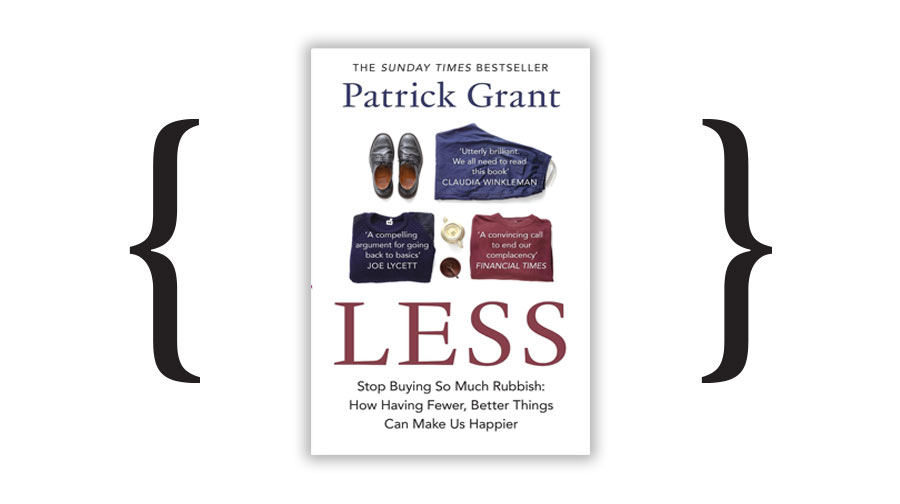
Book Review: Less
Book review: A tailor’s manifesto for mending more than just our clothes
In a world brimming with excess, Patrick Grant’s Less: Stop Buying So Much Rubbish – How Having Fewer, Better Things Can Make Us Happier is a crisply tailored takedown of modern consumerism. Best known as a judge on The Great British Sewing Bee and the man behind the revival of Savile Row stalwart Norton & Sons, Grant has long used his public profile to thread together questions of style, sustainability and social value.
With Less, he cuts through the marketing noise of fast fashion and cheap convenience, arguing instead for a revival of dignity—in clothing, in craft, and in community. At the heart of his argument is a simple but deeply unfashionable truth: that owning fewer, better-made things is not a sacrifice but a route to personal and collective well-being.
I didn’t read Less in the traditional sense—I listened to it on the bus and on wet Auckland walks that reminded me of the rainy Pembrokeshire days when I first met Patrick at BFest, a three-day gathering of the then newly formed UK B Corp community back in 2016. It was there that I first heard him speak with passion about Community Clothing, the social enterprise he had just launched. What stuck with me wasn’t only the clarity of his argument about the need for a better way forward for his industry—it was the pride he clearly had in describing the people, processes and places behind every garment his fledgling business was making.
That sense of pride stayed with me when, on a trip back to my hometown of Burnley—just down the road from local football rivals Blackburn—I visited Community Clothing’s factory there. Cookson & Clegg, established in 1860, had seen better days before being revived under Patrick’s leadership. Touring the floor with Dave O’Kane, the factory’s Technical Development Manager, it was clear that this was more than a business—Patrick had created, or maybe reignited, a real sense of purpose—built on skill, history, and hope.
Community Clothing exemplifies a business with purpose stitched into its very DNA. It harnesses underused UK manufacturing capacity to create affordable, high-quality wardrobe staples—an antidote to fast fashion in every respect. It supports skilled jobs, revitalises local economies, and offers a deeply human counterpoint to the disposable culture that dominates modern retail.
What sets Less apart from the usual decluttering literature is its sheer ambition. This is not just a call to simplify but a call to rebalance. Backed with meticulous research, Grant takes aim at inequality, industrial decline, and the soul-sapping effects of algorithm-driven, faster-and-faster consumption. His voice—by turns exasperated, warm, and gently persuasive—echoes the quiet wisdom that doing less, but better, might just be the most radical act of all.
Less is not a branding exercise; it’s a deeply argued philosophy for living and working better—offering substance in a sector too often distracted by overpaid influencers and synthetic imagery.
The audio edition includes a PDF of a lecture Grant gave at the Royal Geographical Society. It’s well worth a read. In it, he outlines a radical reimagining of the clothing economy—redistributing value to makers, replacing high-volume consumption with local, circular models, and building more fulfilling jobs across the lifecycle of garments. It’s a compelling vision of a sector rebuilt around values, not just value.
The book is not without its seams. At times, its polemical tone flirts with nostalgia, and readers seeking detailed policy design may find the arguments more moral than material. But these are minor quibbles in an otherwise sharply observed and urgently necessary book.
In the end, Less is not just about buying fewer clothes. It’s about building a life and an economy that is more intentional, more inclusive, and more human. For those of us who believe—as I do—that business must do more than turn a profit and sprinkle charity on top, Grant’s message is a well-measured fit with the wider argument for purpose-led enterprise.
In CORE, I tell the story of walking that Blackburn factory floor with Dave, then phoning Patrick and his then-CEO Lucy Clayton that same evening to share an observation: it was pride, I felt, that seemed to drive everything. Patrick agreed. But perhaps—nine years on—it’s something even more elemental that has threaded all the parts of his enterprise together. Perhaps the more powerful unifying idea is, quite simply, less.